 Midlife Crisis Watches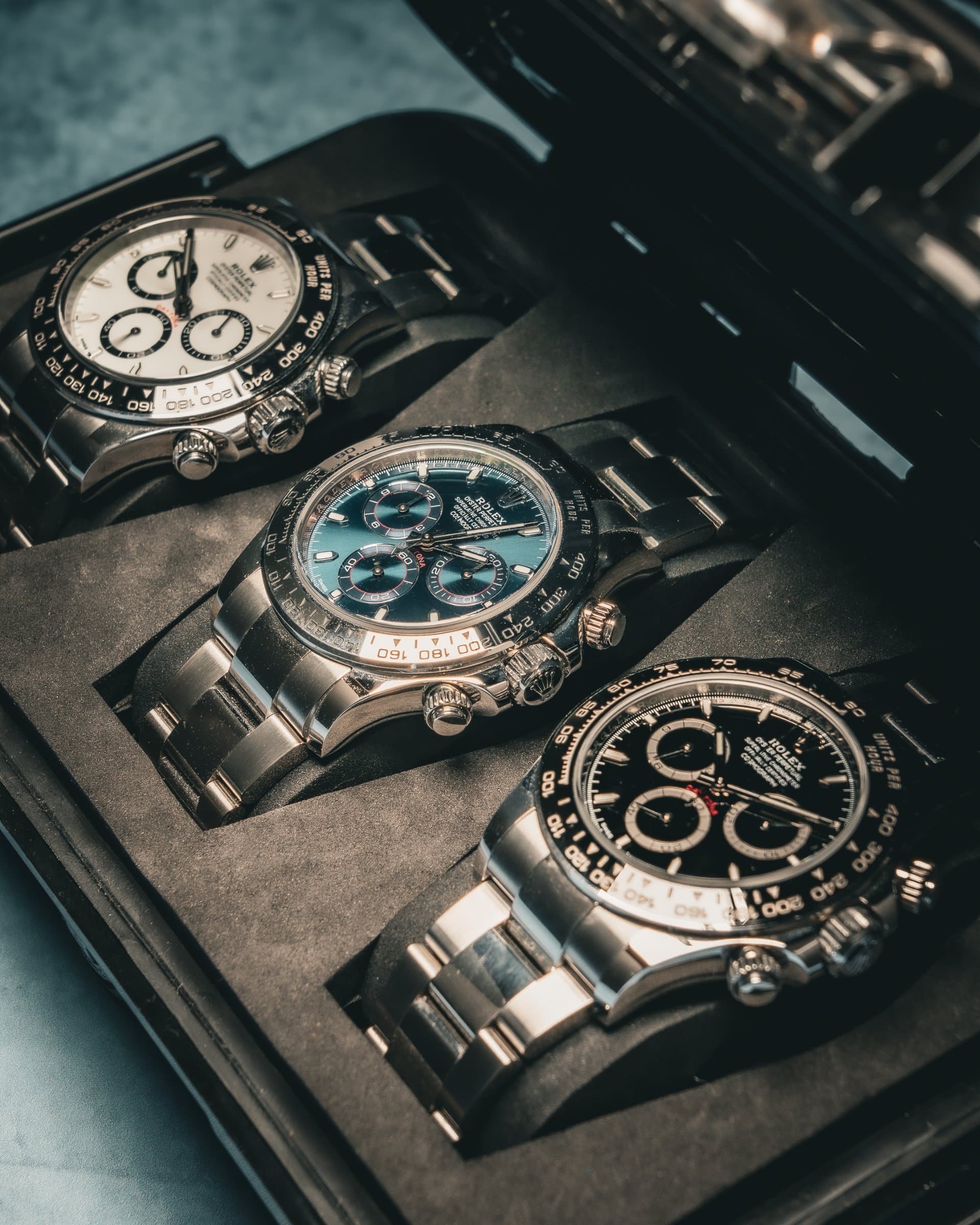
The Should Complication
What role does the word 'should' play in watch collecting?
By @midlifecrisiswatches · · 10 min readA reader sent me a question that I have been turning over for a couple of weeks now. What role does the word "should" play in your collecting? Do you own watches because you love them, or because the watch world convinced you that a serious collector is required to?
My first instinct was to say no. Then I pulled up the actual collection list instead of trusting memory, which is a mistake worth making at least once. Self-image and spreadsheet do not always agree.
Fifty two watches. Nine of them are Rolex. Add a Tudor, a Speedmaster, a Seamaster, and you have a dozen watches that would show up on almost any generic "watches every collector should own" list a stranger with no knowledge of my taste could have built for me. That is not a rounding error in a collection this size. That is real estate.
So the real answer isn't "should has no place here." It's that should got a dozen votes out of fifty two, roughly 23 percent of the collection. That's worth sitting with. The question now is which of those dozen I still love and which ones I'm just afraid to sell.
I also want to pull apart two ideas that got tangled together in that question. Influence and should are not the same word, even though they get treated like they are.
Influence is how a watch gets on your radar. A YouTube review, an Instagram post from someone whose eye you trust, a friend wearing something you'd never noticed before. Influence is just information reaching you. Should is a judgment about motive. It's the accusation that you bought the watch because everyone else has one, not because you actually wanted it once you understood it.
Those two get treated as a package deal, and they shouldn't be. Justin Hast is a good example of what real influence looks like. I've watched a ton of his videos, including the whole run of the Four Married Men podcast, and he's talked plenty about his Lange 1, the light dial version, in a way that put that watch on my radar for a long time. I ended up buying a different Lange 1 in the end, but he's the reason the reference was ever on my list to begin with. And that's fine. That's what influence is supposed to do, put something in front of you that you might have never found on your own. I can say the same thing about the Speedmaster, the Submariner, the Daytona Panda, watches that showed up on my radar because of someone else's eye before they ever became mine. That's influence, and I'll own it without flinching. It does not automatically mean should. The test isn't where the idea came from. The test is what happened after the idea landed on your wrist.
The other forty
Here is what makes the audit worth doing instead of just admitting defeat. The other forty watches in the collection could not have been assembled by consensus if I tried. Dornbluth & Sons. Selten. Oan Gio. Delft Watch Works. Behrens. Marin Instruments. Three Studio Underd0g pieces. A Universal Genève Polerouter Date. A Gallet Multichron. Nobody outside a fairly obsessive corner of this hobby has heard of half these names, and nobody is putting them on a listicle. You cannot back into that bucket by following a consensus. You have to actively go looking for it.
That is the real split in the collection. Forty watches nobody told me to buy, and a dozen that the internet would have handed me without asking a single question about what I actually like. The interesting question isn't which bucket is bigger. It's what the dozen are doing there.
Auditing the icons
I'm not going to pretend every should watch in the collection is a mistake. Some of them earned their spot the hard way, by surviving a cull that took the collection from around 140 watches down to 40 and then let it grow back out from there with more intention. But I want to be honest about which is which, watch by watch, instead of hiding behind a thesis statement.
Two Submariners, vintage 5513 and modern 124060 No Date. These answer different questions, and the wrist time backs that up. The 5513 gets worn. It's not a shelf piece, it earns its spot the same way the vintage GMT does, on history and character rather than on being an icon. The 124060 had a real run in 2025, plenty of wrist time, plenty of reasons to reach for it. This year it's sacrificed time to the rest of the rotation, which isn't a verdict on the watch so much as a sign of how much the collection has grown around it. A should watch that's actually should tends to fade permanently once the novelty wears off. This one faded because better competition showed up, not because it stopped being wanted.
Explorer II Polar and GMT-Master 1675 Pepsi. Both been in the collection a while, and both tell a similar story right now. I put the Explorer II on an orange rubber strap a while back, sharper look, more mine, and it still doesn't get much wrist time these days. The 1675 is in the same spot. Neither is a rejection of the watch. It's just a sign of how crowded the rotation has gotten as the collection has grown around them.
Three Daytonas, Cosmograph, Panda, and the 126509 blue dial. I'll admit I wrote a skeptical version of this paragraph before I actually asked. Owning multiple examples of the same reference invites the obvious question, is the extra one about the watch or about what owning more than one says. Then I checked my own wrist. The Panda is my number one watch for wrist time this year, and it was number one last year too. That's not a should watch. A should watch sits in the box getting photographed for the blog once and then waits for resale value to justify its existence. This one is in the rotation more than anything else I own, including pieces that cost multiples of it. Influence got it on my list. Wearing it kept it there. The 126509 is the outlier of the three. It rarely gets wrist time, and I love it anyway. That's worth sitting with for a second, because it cuts against the whole diagnostic I just built around the Panda. Wrist time is a good proxy for should, but it's not the only one. Some watches earn their keep by being loved rather than worn, and pretending otherwise would be dishonest just to keep the argument tidy.
Speedmaster 145.022. This is the closest thing in the whole collection to a clean should confession, and I'd rather say that plainly than dress it up. I knew I wanted a Speedmaster in the collection because of how iconic it is, full stop. At the time I bought it I didn't know much about the different variations out there. I went with the one I could afford. That's about as should as a purchase gets, influence and should landing on the same watch with no daylight between them. And I don't regret it. It's been a fantastic watch, and it gets wrist time every once in a while. Maybe that's the real lesson buried in this one entry. Should doesn't ruin a watch. It just means the reason you bought it and the reason you keep it don't have to match.
Rootbeer 16713. This one's got a plan already. I'm giving it real wrist time this fall and winter. The brown and gold read season-appropriate in a way that doesn't need much explanation once you've seen it, and it's the kind of watch that actually benefits from cooler light and heavier fabric around it. This is the opposite of a should watch sitting untouched. It's a watch with a calendar.
Where should I don't get a vote
The clearest evidence I can offer that should isn't running the show is where the money is actually going right now. The Zenith G.F.J. Bloodstone in yellow gold arrived this week. Nobody is telling me I should own that watch. Over the next six to twelve months, an Artisans de Genève Rolex Submariner I customized myself, a Gian Guobiao AB-05 Skylight Sun, and a Habring2 x Benzinger piece with a Holthinrichs sub-seconds hand will all land. None of those exist because a forum told me to buy them. They exist because I went looking for something specific and found it.
That's probably the real test, and it's a test I'd hand back to any reader asking themselves this same question. Look at where your money is going right now, not where it went five years ago. The old purchases are frozen in time and easy to rationalize after the fact. The current pipeline tells you what you actually want today, with no should left to hide behind.
The tell
If I had to give the reader one diagnostic, it's this. Forget where the idea for a watch came from. Track where it lands once you own it.
The Daytona Panda already made the point above, but it's worth a callback here. Influence put it on my list. A year and a half as my most worn watch is what's kept it there, and this summer it's got real competition from the Parmigiani Fleurier Tonda Minute Rattrapante and the Laurent Ferrier Sport Auto, with the Lange 1 Moonphase likely taking over once fall and winter hit. None of those three were should watches by anyone's definition. If the Panda holds its own against that group, that's the answer right there.
The one I still miss is the Zenith x Hodinkee Chronomaster, the orange dial that still shows up in my Instagram feed every so often like it's checking in on me. It was a genuinely beautiful piece, limited edition, not something you see often even in circles that pay attention to this stuff. It left as part of a trade, bundled with a few other watches to fund something else. Nobody influenced me toward that one. I found it, I loved it, and I let it go for a deal that made sense on paper and still doesn't quite sit right.
The one I don't think about is the Audemars Piguet Royal Oak. Classy, gorgeous, the two-tone case and bracelet doing exactly what they're supposed to do. I just didn't wear it. It was competing against a growing stable of integrated stainless sports watches in the collection and kept losing. That's the closest thing to a should watch I've actually let go of. Not because should is inherently wrong, but because the watch never earned real estate on the wrist once the influence wore off.
Should isn't always wasted money. Sometimes it's tuition, and sometimes influence and should turn out to be the same purchase wearing two different names. What matters isn't resisting influence. It's checking back in six months later and being honest about whether the watch earned the wrist time or just earned the impulse.