 Midlife Crisis Watches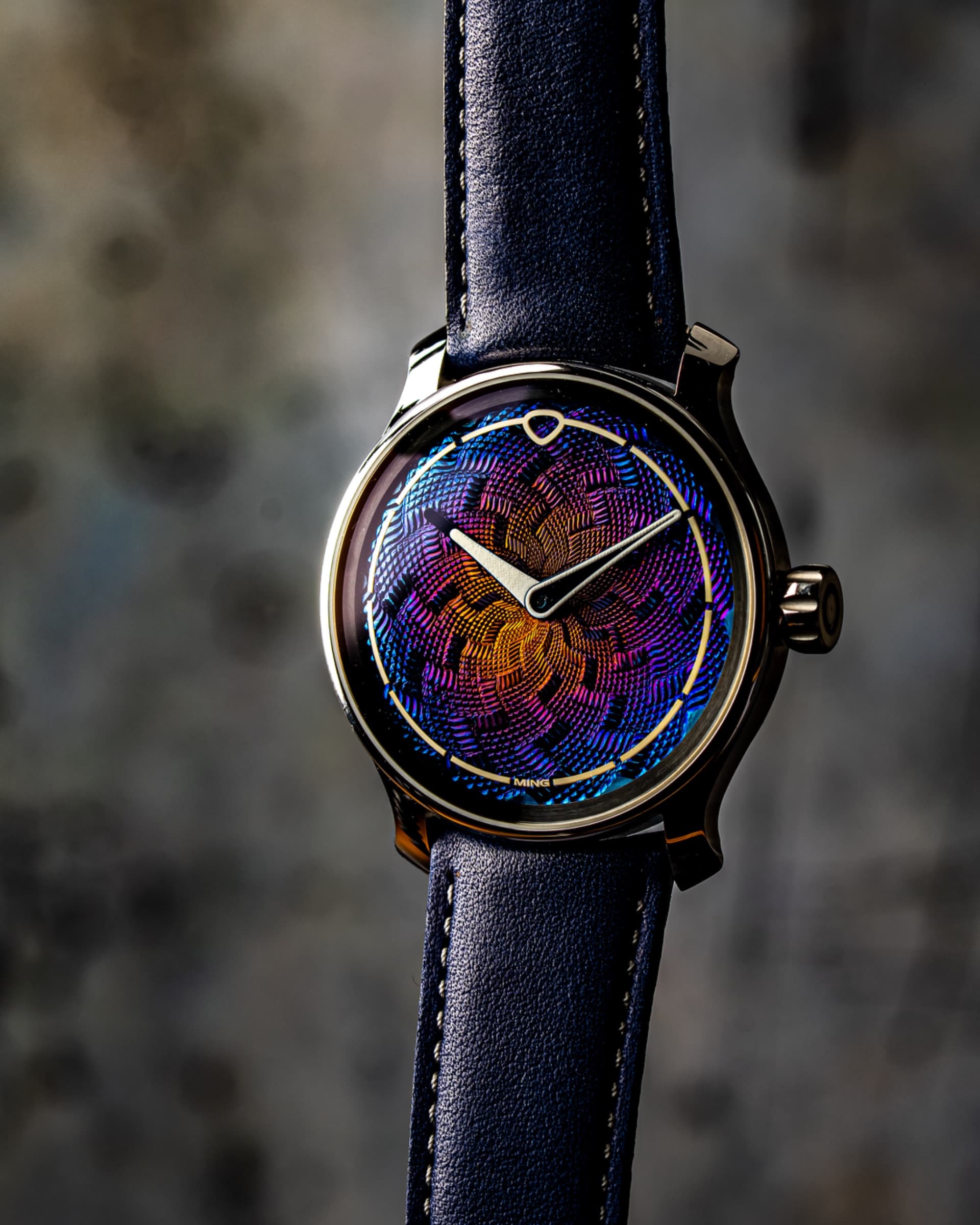
I Didn't Break My Rule. I Finally Had Time to Follow It.
On the Ming x Shapiro, and why the watch that gets you isn't always the one you say yes to first.
By @midlifecrisiswatches · · 5 min readI broke my rule this year. That's the version of this story I told myself for about ten minutes after signing the slip at Shreve, Crump & Low. It's also wrong.
My rule for 2026 was simple: stop buying every microbrand release that shows up in my inbox. In 2024 and 2025 I picked up piece after piece in the $750 to $10,000 range, wore most of them once or twice, and watched them settle permanently into the watch box. That's how a collection gets to 140 watches. Not through one bad decision. Through a hundred small ones that each felt too cheap to think hard about.
That's the part people miss when they hear "under $10k, easy impulse." A $25,000 watch forces a real decision. You sit with it, you think about what it displaces, and you spend a few days talking yourself in or out of it. A $1,200 microbrand doesn't get that treatment. "What's one more" is a sentence that only works when the stakes feel small enough to not really count. The danger was never the expensive stuff. It was the stuff cheap enough to buy without deciding.
The specific numbers here are mine, not a universal scale. What counts as "cheap enough to not really decide" depends entirely on what you're working with. Someone else's version of my $750 microbrand might be a $75 one, and someone else's version of my $25,000 gut check might be $250,000. The dollar figures aren't the point. Everyone has a threshold where they stop deciding and start collecting, and the only useful exercise is finding yours.
So the real rule was never a price cap. It was don't buy until you actually know you want it, not until you've talked yourself into wanting it.
I tested that all year, and mostly I held. Baltic released the Spaceone early on, and it's a piece I genuinely admire. A few collectors whose taste I respect bought one for their own collections. I sat it out, correctly guessing it would sit well in mine but never earn real wrist time. I still don't own one. I still don't regret it. That's a rule doing exactly its job. I may regret it when I start seeing them pop up on Instagram from some of you...
The Ming x Shapiro Lightning was a harder test, because I got it wrong the first time in a way that stung. I'm a former Ming owner, so I had advance notice before the collaboration with JN Shapiro went public. I passed. I didn't think I'd wear it enough to justify it. Then people started posting theirs on Instagram, and I knew almost immediately I'd made a mistake. That's a specific kind of regret, watching a decision you made calmly turn out wrong in public, one post at a time.
This is the part that explains everything else in the story. A few weeks later I walked into Shreve and Tai told me he had three pieces he wanted me to see before they went anywhere else. Not on the website. Not on the floor. A tray, brought down specifically for me: a Satory Billard, a Kollokium, and a Ming x Shapiro he'd taken in on trade hours earlier that same day.
Two of the three were easy. I already owned a different variation of the Kollokium. This particular Satory just isn't my style. Both no's, no hesitation, no second-guessing.
The Ming was different, and not because I'd finally learned my lesson. It was different because I got to make the decision the way a decision is supposed to get made. No public drop, no countdown timer, and nobody else's units already filling my feed before I'd formed an opinion of my own. Just a watch on a tray, a relationship with someone who actually knows what I collect, and enough quiet to know what I thought about it. I smiled and handed over my Amex before I'd fully finished the thought. Keep in mind that I definitely saw some of these in the wild - including these great shots by @watch_diversion.
A rule only works when you have room to apply it. Most of the moments that test collecting discipline aren't really tests of discipline at all. They're tests of whether you have time to think before the piece is gone. A limited release with a countdown clock removes that room on purpose, for everyone, by design. It turns a decision into a race, and a race rewards speed over conviction.
This wasn't the first time in 2026 that a relationship gave me a look before the market did, and it won't be the last time I write about that. But this one is about the Ming, and what it actually took to say yes to it the right way. Not by finally breaking a rule. By finally being given enough time to keep it.