
The Missing Middle (Part 2): The Place in Line
Why independent watchmakers sell access more than watches, and what to do with $8,000 to $15,000 right now
By @midlifecrisiswatches · · 10 min readA watch I couldn't buy
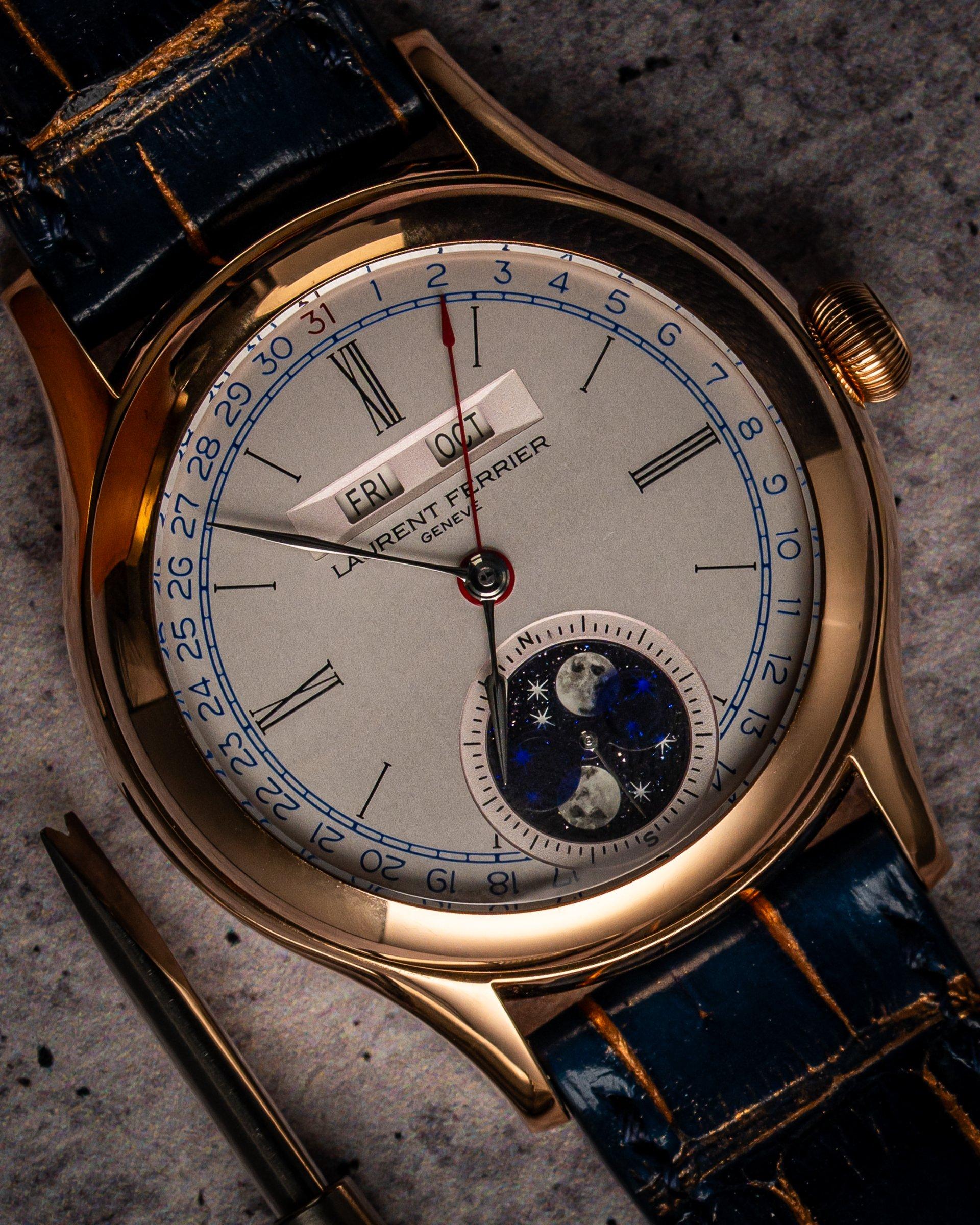
When I first started admiring Qian GuoBiao's work, there was nothing to buy. He wasn't taking new orders, so as much as I liked the watches, there was literally no way to own one. We kept talking anyway. Eventually he messaged me about the AB-05 and emailed me the souscription terms, and I wired the deposit. I've never met him and I still don't own one of his watches. What I have is a place in line.
Part 1 covered why the middle of the luxury market is emptying out. This part is about where the value goes instead, and whether the middle ever comes back. (And if you have Qian GuoBiao's AB-01 Small Seconds, or know someone who does, please reach out.)
What independents actually sell
Part 1 ended with a line I need to walk back a bit. I said value was moving toward pieces made for one person, the watch world's version of Ferrari's personalization, and that overstates it. Most independents sell fixed references. Rexhep Rexhepi's RRCC II is capped at 50 in rose gold and 50 in platinum, and the metal usually decides the dial. Berneron makes 24 a year in each metal. Real customization, like Ochs und Junior's online configurator or Kari Voutilainen's commissions, are the exception.
Collectors pay for tiny output, the person behind it, and, more than anything, access. That's where the Ferrari comparison holds. Ferrari offers its most limited cars only to carefully selected clients, and all 799 F80s were already assigned by the time the car was unveiled. Higher end independents run the same gate with less machinery: allocation lists, souscriptions, and in Simon Brette's case a WhatsApp group with the 12 people who backed his first watch.
The collector as the bank
A souscription works like a funding round. The collector pays a deposit, sometimes years ahead, and the maker uses it to build the watch. Breguet did this in the 1790s, taking a quarter of the price up front. Brette did it in 2023. He couldn't afford to build his first batch on his own, so he messaged collectors on Instagram, and 12 of them put down deposits for a brand that didn't technically exist yet. I have some capital tied up in a few of these with a variety of independents as I type.
Ferrari doesn't need your money in advance. An independent often does, and the collectors who put money in early tend to get the next call. At the extreme, the line closes entirely. Voutilainen, who makes fewer than 60 watches a year, stopped taking new orders this year because waits had passed a decade.
Renting credibility
The big groups have noticed what an independent's name is worth. Vianney Halter's design went on sale at two very different prices this fall: Bulgari's Octo Finissimo with Halter at CHF 70,000 to 108,000 in September, and Louis Erard's Futur Antérieur at CHF 4,950 in October. Louis Vuitton went further, buying La Fabrique du Temps in 2011 and later using it to revive Daniel Roth and Gérald Genta. Zenith signaled its own move upmarket with a G.F.J. co-signed with Naoya Hida.
I think collaborations are good, and fashion has been doing them for years. The independent gets money and reach without scaling a workshop that can't scale, and the big brand gets credibility it can't manufacture. Collectors come out ahead too, since a Louis Erard Halter at CHF 4,950 is the only realistic way most people will ever wear Halter's design.
As I type this, I'm wearing a Schwarz Etienne watch with a Kari Voutilainen dial (and decoration on the calibre). It's quickly become one of my favorite pieces in my collection.
Why the middle loses
The middle can't play either game. It doesn't have Ferrari's scale and pricing power, and it doesn't have a maker people know by name. LVMH watch chief Jean-Christophe Babin said this spring that the mid-market is a tougher game for TAG Heuer and Zenith. In Morgan Stanley and WatchCharts' mid-2025 report, every brand it measures against retail, other than Rolex, Patek Philippe and AP, was trading at least 28% below retail.
Some of that comparison is unfair to the big brands. An independent making 40 watches a year only has to find the 40 most eager buyers in the world. An industrial brand has to sell to the buyer at the end of a very long line, someone who would happily take a different watch or wait for a discount, and resale prices get set by that last buyer. Rolex, Patek and AP show that volume isn't automatically fatal, but they're the exceptions, and they get there by keeping supply below demand on purpose.
At the top, independents keep setting records. A Journe prototype sold for $10.8 million last December, a record for an independent. But auction records show the best pieces at the best moment, and we rarely hear about the independents that close down shop. Purnell went into liquidation in 2024. Tiny output protects prices, and it also makes the business fragile. We are in the golden age of independents now but it's highly unlikely that all survive this period into whatever cycle comes next.
What personalization costs
When personalization does happen, it comes at a cost. My Delaloye Renaissance, from a run of 24, will be a piece unique with a blue IV on the dial, because I was born on the 4th. The idea came out of my conversations with Alexandre Hodor at Delaloye, and designing it was a ton of fun. But a watch made for one person is worth the most to that person. To the next buyer, my blue IV is either a charming story or a reason to ask for a discount. Hopefully it never leaves my collection so that isn't even an issue.
My Artisans de Genève commission pushes that further. I've wanted one since I saw their Warm Burgundy Daytona, and mine is a Submariner themed on the Knicks' 2026 championship. Artisans de Genève reworks a watch you already own, much the way Singer reimagines Porsche 911s, and Rolex reportedly treats that kind of work as voiding its warranty. Some buyers will pay less for it and some won't buy at all. I'm fine with that, because personalization only makes sense once you've decided to keep the watch.
Is the feed speeding this up?
Social media has shrunk the distance between a young maker and the handful of buyers he needs. MB&F's Maximilian Büsser said in 2024 that new makers just put their designs on Instagram and people come running. The buyers have changed too: in 2025, 96% of Phillips' watch bidders took part online, and a third of buyers were millennials or Gen Z.
The feed also piles everyone onto the same few names, which I wrote about in Why Does Every Influencer Have the Same Watch? There's research behind that. In a well-known experiment at Columbia, showing people what others had downloaded made the hit songs bigger and much harder to predict. The best songs rarely flopped, and the worst rarely won, but almost anything in between could become a hit depending on who clicked first. Swap songs for watches, and you have a pretty good description of a hype cycle. Please re-read this paragraph. It's important.
We've seen social-media booms before. In sports cards, PSA had to suspend most of its grading services in 2021, and then modern cards fell more than 30% in 2022 while pre-war cards rose. As I wrote in What 35 Years of Sports Cards Taught Me About the Watch Market, the money didn't disappear; it rotated back to the proven names. Michael Jordan cards have been all the rage over the past 6 months. Sneaker resale premiums fell from 61% to about 4%, and Labubu resale prices collapsed once Pop Mart raised supply. The hype only lasted where real scarcity sat underneath it.
Independents aren't one group, and this is where my cards post applies. In that piece, Patek, Rolex, Vacheron, Lange and AP were the Hall of Famers of watches overall, and the hyped newcomers were rookies who might never pan out. Within independents, Journe, Dufour and Voutilainen play the Hall of Famer role, with decades of track record and tiny output, and the money rotating back to proven names includes them. The rookies are the brands with a viral launch, a growing edition size and buyers flipping their pieces on delivery, and that's where I'd expect the next correction to hurt.
When does the middle come back?
History says the middle doesn't come back on its own. During the quartz crisis, Swiss watch employment fell from about 90,000 to just over 30,000 by 1984, and the industry recovered at both ends, with Swatch at the bottom and mechanical watches repositioned as luxury. After 2009, exports rebounded 22.1% on the back of new buyers in China. The last boom skipped the middle entirely: in 2021 versus 2019, exports above CHF 3,000 rose 9.7%, while CHF 500 to 3,000 fell 3.5%.
Over the longer run, the reset has already happened. Switzerland exported about 29.9 million watches in 2000 and about 14.6 million in 2025, half as many, while the value of total watch-industry exports went from CHF 10.3 billion to CHF 25.6 billion. The industry sells half the watches for two and a half times the money, which is about as clear a picture of the missing middle as you'll find.
So a recovery takes either a new group of buyers or a price reset. Bain estimates the number of luxury consumers fell by about 50 million between 2022 and 2024, and those are exactly the aspirational buyers the middle depends on. A price reset would mean brands cutting list prices to what the secondary market already pays, and I haven't seen the mid-tier names do that yet. My guess is that the middle returns as brands that are either cheaper, like Gallet, or rarer, like the new Zenith.
What to do with $8,000 to $15,000
If that's your budget right now, I think you have three good options.
1. Buy a handful of microbrands. At $1,500 to $4,500 each, you can try several watches from brands like Baltic, Awake, Selten and OAN.GIO and find out what you actually like. Most won't hold their value, so buy them to wear.
2. Buy the $14,000 watch and negotiate hard. Most brands outside Rolex, Patek and AP trade well below retail on the secondary market, and dealers know it. Pay something close to the clearing price, not list.
3. Wait. Save toward something more expensive, and use the time to start a conversation with a maker before there's anything to buy. More expensive doesn't necessarily mean better, so spend the money on something you actually value.
The one move I'd avoid is paying full list for a watch in the middle and assuming it will hold its value.
Back to the place in line
I started with a watch I couldn't buy, and that's where I've landed. As the middle empties out, more of what holds its value is stuff you can't just walk in and buy. Getting it doesn't take a big budget. Mostly it takes patience and a willingness to keep talking.