 Midlife Crisis Watches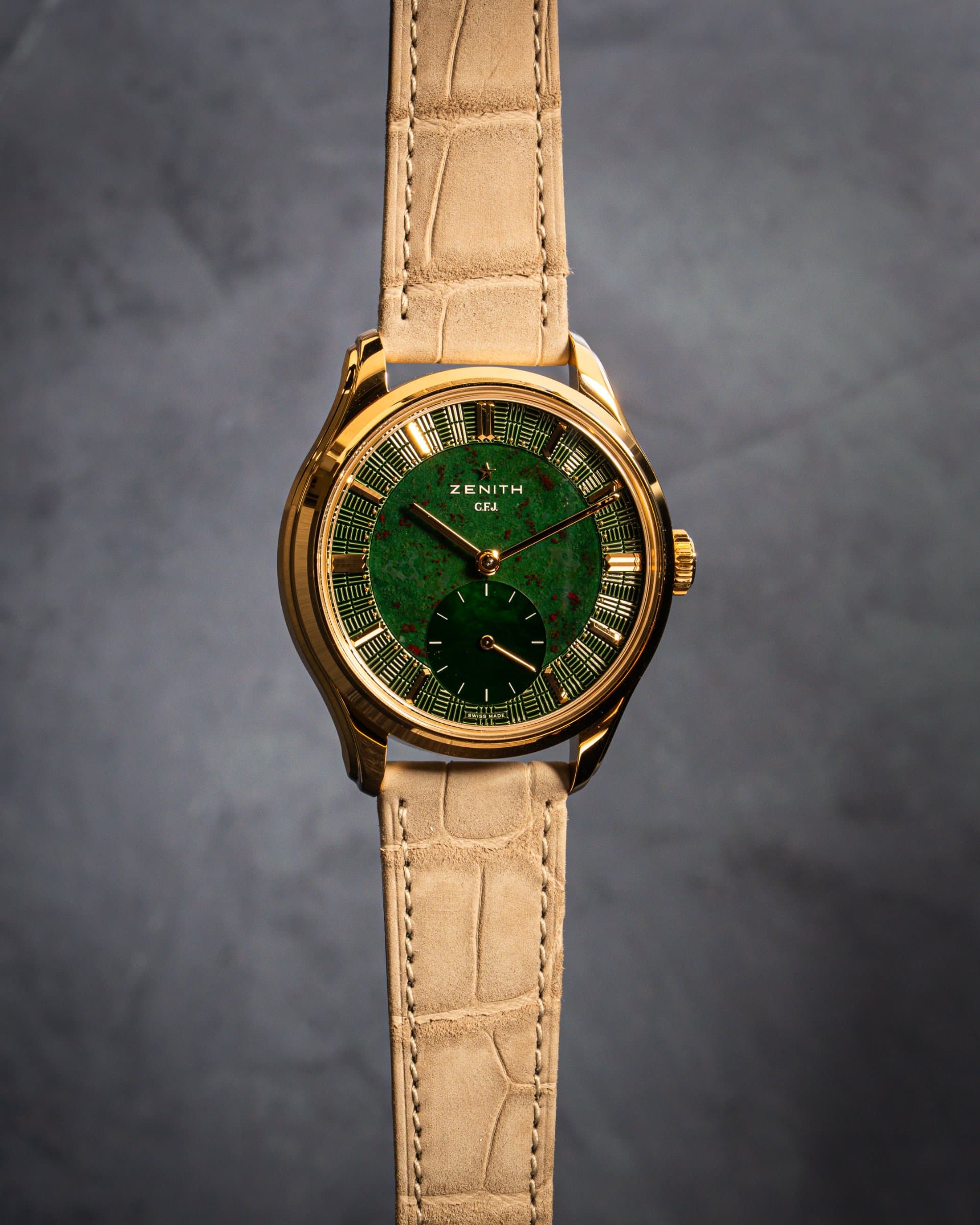
How I Sell Watches (And the Ways I Won't)
Trading, consignment, and a survey of every other way to sell a watch, with real commission ranges and why the relationship matters more than the percentage.
By @midlifecrisiswatches · · 6 min readI wrote a piece earlier this week on how I source and buy watches, built around a piece of advice a mentor gave me: buy the seller, not just the watch. That advice runs both directions. Culling a collection from 140-plus watches down to around 40 means I've sold a lot of pieces, and almost all of it went through two channels. I'll walk through both, then survey the rest of the landscape, because there are more ways to sell a watch than most collectors ever try.
The trade.
When I'm buying a new piece, I'll offer something from the collection against it, to the same dealer or private party I'm already transacting with. This is how the Zenith G.F.J. Bloodstone came in. I put up four watches plus cash. Not a small trade.
Here's what nobody tells you about trading until you've done it a few times: cash price and trade value are two different numbers, and the gap is real money. On that Zenith, I probably gave up somewhere between $5,000 and $8,000 in trade value versus what those four watches would have brought in cash. A dealer taking a watch in trade has to build in enough margin to resell it, so the number they'll give you is always a step below open market.
The other thing that matters more than people think: you have to trade in watches the dealer can actually sell. Handing a retailer four pieces that don't fit their store or their customer base gets you a worse number, or gets your trade turned down entirely. If you want a trade to work, bring pieces that are easy for them to say yes to.
Consignment, and why the person matters more than the percentage.
For consignment, I use Pucks & Timepieces. Jeremy and I go back to a previous life, before he was in watches full time, and I was one of his first customers when he made the jump. That history matters. We have a shared workflow that keeps me in the loop on what's sold and for how much, no chasing him for updates, no wondering where a watch is in the process.
Consignment commissions across the industry generally run 10% to 30%, most landing near 20%. I've never once tried to negotiate Jeremy down a point or two, and here's why. I put out a video on Instagram Stories recently about relationships, the idea that the best ones are where both sides eat. Everyone walks away happy. The moment one side eats and the other starves, the relationship has a short shelf life. I'm in this space for the long run, so trying to save $200 here or shave 2% there isn't worth it to me if it costs me the relationship that makes every future transaction easier.
What I don't do.
I don't sell watches first-hand. Not on forums, not to a stranger who slides into my DMs after seeing something on Instagram, not to anyone I'd have to meet in a parking lot or ship a five-figure watch to on a wire transfer and a prayer.
Two reasons. Privacy is one. I don't need my name, my address, or the contents of my collection attached to a transaction a stranger can see. The other is that I'd rather pay someone to absorb the headache. First-hand selling makes you the customer service department. A disputed scratch, a disputed payment, three weeks of negotiating over $400, that's all your time and your risk. I'll give up a percentage of the sale price every time to avoid it.
The part nobody talks about: selling is harder than buying.
Buying a watch is exciting from the first thought to the moment it arrives. Selling is a different emotional register entirely, especially when the watch is one you worked to get or genuinely liked.
I recently gave up two of my H. Moser & Cie pieces to move into another Moser and a Rolex Submariner. I'm decisive once I've made a decision, and once I'm there, I'm at peace with it. Getting to that decision point is the hard part. And the actual hardest part, more than the sentimental pull of letting a piece go, is that the trade value almost always lands below what you expected the watch to be worth. Making peace with that gap is the real work of selling, more than saying goodbye to the watch itself.
Ways to sell a watch: the rest of the map.
Trading and consignment cover what I've actually used, but it's worth knowing the full landscape, especially since some of these are genuinely good options depending on what you're selling and how much hands-on involvement you want.
The below should be generally accurate, or as accurate as I can quickly research in September 2026.
Method | Typical seller cost | Speed | Privacy |
|---|---|---|---|
eBay | 15% up to $1,000, 6.5% to $7,500, 3% above | Fast, you set the terms | Low, you're the visible seller |
Chrono24 | 6.5% flat for private sellers, steps down above $10K | Moderate | Low-moderate, escrow shields payment |
Bezel | 12% at entry, down to mid-single digits with volume, $225 minimum | Fast once listed | Moderate, they handle authentication |
Grailzee | ~$100 flat listing fee, no percentage | Moderate | Moderate, similar authentication model |
LoupeThis | $500 flat consignment fee, any value | One week, fixed auction window | Moderate, curated collector audience |
Traditional consignment | 10% to 30%, ~20% typical | 60 to 120 days | High, dealer is the face of the sale |
Watch fairs (NAWCC, Philadelphia Watch Trade Show) | Table fee, low hundreds of dollars | Same day | None, you're behind the table |
Auction houses (Christie's, Phillips, Sotheby's) | Negotiable, near-zero for trophy pieces, +10-40% otherwise | Months | High, house handles everything |
The marketplaces (eBay, Chrono24, Bezel, Grailzee) sit in a middle zone. They've solved a bit of the trust problem with escrow and authentication (not always accurate, I know), but you're still the one writing the listing and often fielding buyer questions. That's a lighter version of first-hand selling, not a replacement for it. LoupeThis is the standout if you want something collector-native rather than corporate, a flat fee and a real auction format run by people who know what they're looking at. Watch fairs work if you're moving several pieces and don't mind being visible. Auction houses only make sense for the rare piece with a real story behind it.
Frequently Asked Questions
How much does it cost to sell a watch on consignment?
Dealer commissions on watch consignment typically run 10% to 30% of the sale price, with most landing around 20%. The exact rate matters less than who you're consigning with.
Is Chrono24 or eBay cheaper for selling a watch?
Chrono24 is cheaper for most private sellers, charging a flat 6.5% commission that steps down at higher price points. eBay charges up to 15% on the first $1,000 of a sale and requires you to handle buyer communication and shipping yourself.
What's the fastest way to sell a watch?
Marketplaces like eBay, Chrono24, Bezel, and Grailzee move fastest since you control the listing and price. LoupeThis offers a fixed one-week auction window. Traditional consignment and auction houses take longer, generally 60 days to several months.
Is trading a watch better than selling it for cash?
Trading works well when you're already buying and want a single, low-friction transaction, but trade value is almost always lower than cash value since the dealer needs resale margin. It works best when you bring pieces the dealer's own customers will actually want.