 Midlife Crisis Watches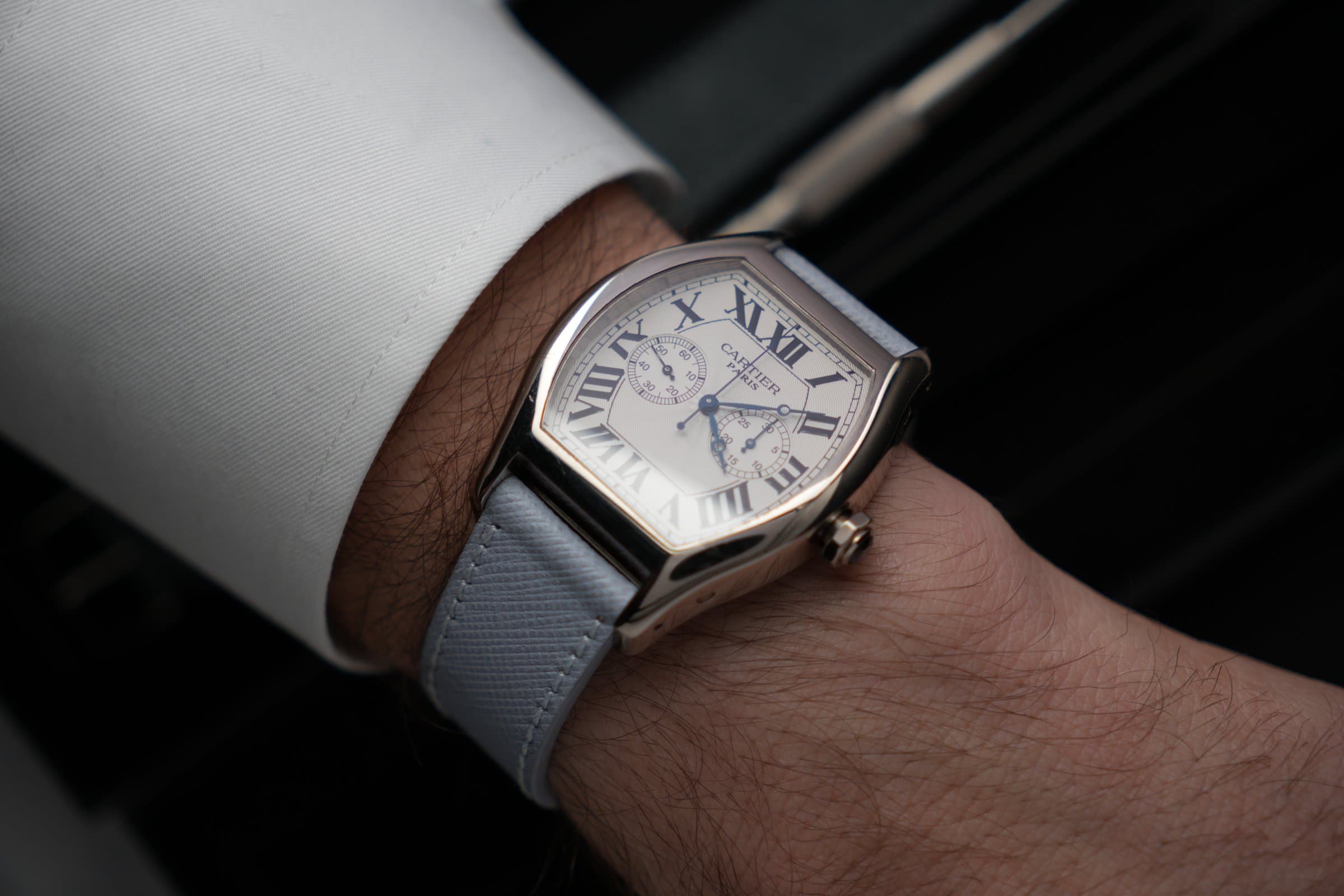
The Chase, the Cull, and What's Left
Purchase emotion and ownership connection are two different currencies.
By @midlifecrisiswatches · · 7 min readFrom my Instagram question box, @themainplatesf asked about emotion in purchasing versus emotional connection in owning a watch. This is the best question I received, and it took me a while to answer honestly.
Let me start with a confession: I love the thrill of the chase. Always have. I collect sports cards too, and you can do a lot of damage in collecting when you love the chase. The chase, for me, is figuring out what the next purchase is and then locating it. The research. Putting feelers out. Talking to people who make referrals to other people. Eventually finding the piece. It's a hunt. A watchhunt. And if I may say so myself, I'm pretty good at it.
So when someone asks me about emotion in purchasing, that's what they're really asking about. For me, the purchase emotion isn't the transaction. It's everything before the transaction. The wire transfer is just the finish line.
The question is what happens after.
Three speeds of ownership
Some watches in my collection still make me giddy, the same as when I was hunting them. The Cartier Tortue Monopoussoir CPCP. The A. Lange & Söhne Lange 1 192.029, and honestly I'm even more giddy about that one today. The Laurent Ferrier Classic Moon Silver. The Behrens NaviGraph. My Tudor 7016.
Other watches settle in nicely. Still excited, just not hunt-level excited. That's most of the collection, and there's nothing wrong with it.
And then there's the rare third category: watches that grew on me after the hunt was over. The Lange 1 and the Behrens are the two clearest cases, and I wrote a full post about them recently (Two Watches That Blew Past What I Expected). Growers are rare. But when a watch outruns the emotion of its own chase, you've found something.
What the cull taught me
Here's where I have data most collectors don't: I went from 140 watches down to about 40. That's roughly a hundred watches where whatever I felt at purchase wasn't enough to keep them.
When I look back at what went, there's a pattern. The culled watches were largely impulse purchases. Many were microbrands that ultimately didn't do it for me. Others were established neovintage or vintage Omegas and similar that were good, but not great. And when you have many great watches, the good get shifted out. There's just no room for them.
The watches that survived were, overwhelmingly, the chased ones.
I don't think that's a coincidence. A months-long hunt forces you to keep re-deciding you want the watch. Every conversation, every lead that goes nowhere, every check of the listings is another vote. An impulse buy skips all of that. The first time you truly evaluate an impulse purchase is after you already own it. That's when the "good but not great" verdict lands, and by then it's sitting in your box taking up a slot.
The chase isn't just the fun part of buying. The chase is a filter.
If you read my 140 to 40 buying lessons, you saw this idea in rule form: keep a list, let it sit a month, and watch most candidates quietly fall off. That was the tactic. The cull is the evidence for why the tactic works. The list rule is just the chase, formalized.
I can see it running in real time. The watch I want most right now is the Andersen Genève Jumping Hour. It's been on my radar for nearly a year, and the filter has been working the whole time, on two levels. First on the watch itself, which has survived every re-decision for a year. Then on the version: I've gone back and forth between the Rising Sun, the Burma Jade, the Black Jade, and the Ole Mathiesen edition. Today I'm all-in on the Ole Mathiesen. My funds are committed for 2026, so this is a 2027 move, which means the filter gets another full year to run. If I still want it then, and I will, that's about as validated as a purchase gets.
The milestone exception
There's one category that breaks the rule.
I told the story in an earlier post in this series: I use watches as milestones. A prize at the end of the workflow. And as my wife will happily testify, I often don't wait for the milestone. Those are fast purchases. Impulse-speed. By the filter theory, they should have been culled at the same rate as everything else.
They weren't. I still have every milestone watch I've ever bought, including the original Panerai Radiomir from the sale of my first company.
So the filter needs an upgrade. It's not the chase itself that predicts survival. It's what the watch arrives carrying. A chased watch arrives carrying months of re-decided desire. A milestone watch arrives carrying a story I can't cull without culling the memory. The hundred watches that went carried neither. They were fast purchases with nothing attached, and pure purchase emotion, the in-the-moment thrill with nothing behind it, is the one thing in collecting that reliably fades.
But connection isn't wrist time
Now the stress test. I track my wrist time daily, and I've said before that the rotation is the most honest signal in collecting. So is an unworn watch just a culled watch that hasn't gotten the news yet?
No. And I have two watches that prove it.
With 40 watches, give or take, not all of them see a lot of wear. Some are seasonal. Some are for occasions: work, a black tie function, a weekend basketball game. They all have a time and a place. I covered this in my owning lessons: the 60-day question, and the exemption for watches with a defined job. Could I see the 40 becoming 30 someday? Yes. Some very tough calls will be made, and I'm not ready to make them yet. But wrist time alone won't decide those calls, and here's why.
I picked up my Tudor 7016 from Shreve, Crump & Low. It sat in the pre-owned section for months with a spidered acrylic, a little dirty, passed over by everyone. I picked it up and instantly fell in love. Then I noticed the caseback was engraved, and the research led somewhere remarkable: LAGOVEN, the Venezuelan state oil company that took over Standard Oil's massive Lake Maracaibo operations when the country nationalized its oil industry in 1976. These weren't executive gift watches. They were tool watches, issued to the divers who maintained the rigs and pipelines in the lake, serial numbers engraved on the casebacks so the storemaster could sign them in and out. Watches of Espionage published a deep dive on these exact 7016s in January, right as Venezuela and its oil were back in the headlines for very different reasons. I sent mine to Ridley Watchmakers, they made it clean and period correct, and I think it's amazing. It's an early-1970s watch, so it doesn't get heavy wrist time. The connection isn't in the wearing. It's in the finding, and in the history it carries whether I wear it or not.
The second is my Grand Seiko SBGH503 Golden Snow, picked up in Tokyo. This version was only sold at the GS boutiques in Ginza, a limited edition, and it commemorates my first trip there. I don't wear it a ton. It's not going anywhere. I'm emotionally connected to it, full stop.
Two low-rotation watches. Two unbreakable connections. One arrived carrying a found story, one arrived carrying a placed story. Which brings the whole answer together.
The answer
Emotion in purchasing and emotional connection in owning are two different currencies, and the exchange rate is brutal.
Purchase emotion is the chase, and I'll never apologize for loving it. But the chase's real value isn't the thrill. It's the filtering. The emotion that survives into ownership was never really about the purchase at all. It's about what the watch arrived carrying: a hunt, a milestone, a history, a place. The hundred watches I culled arrived carrying nothing but the receipt.
Buy whatever you want. Just check what it's carrying.