 Midlife Crisis Watches
Watch Strap 101: What Actually Separates a $40 Strap From a $400 One
By @midlifecrisiswatches · · 11 min readI have somewhere north of thirty straps in rotation right now. Alligator, Zermatt-lined calf, a couple of exotic finishes I still can't pronounce correctly. People ask me constantly where I buy them, why one costs four times another, and whether the expensive ones are worth it. This post is my answer, all in one place. Of course, subject to change over time...
A quick note before we start: this is a 101, not an exhaustive survey of every atelier on earth. I used Gemini for some of the background research on tanneries and supply chains, and I'm sure there are a few makers and details I've missed. If you've got a favorite I skipped, tell me and I'll cover them in a follow-up. With the majority of everyone mentioned here, I have at least one strap from them.
Here's the thesis before we get into the weeds: a strap is the one part of a watch you fully control. The case, the movement, the dial, all of that was decided by someone else years before you bought it. The strap is yours. It's the cheapest, fastest, most personal way to make a watch feel like it belongs to you instead of the brand that made it. That's why I take them seriously, and why I think most collectors under-invest in this part of the hobby.
I think about this every time I look at my own collection. The mint crocodile on my Cartier Tortue Monopoussoir CPCP isn't a color Cartier ever offered on that reference. It's mine. The yellow saffiano on my Dornblüth & Sons 99.2 turns a serious, understated German watch into something with a little mischief in it. The Bulang & Sons canvas on my Lange 1 pulls a formal dress watch toward something I'd actually wear on a Saturday. None of that creativity exists if I leave the factory strap on. That's the whole argument for this hobby within the hobby.
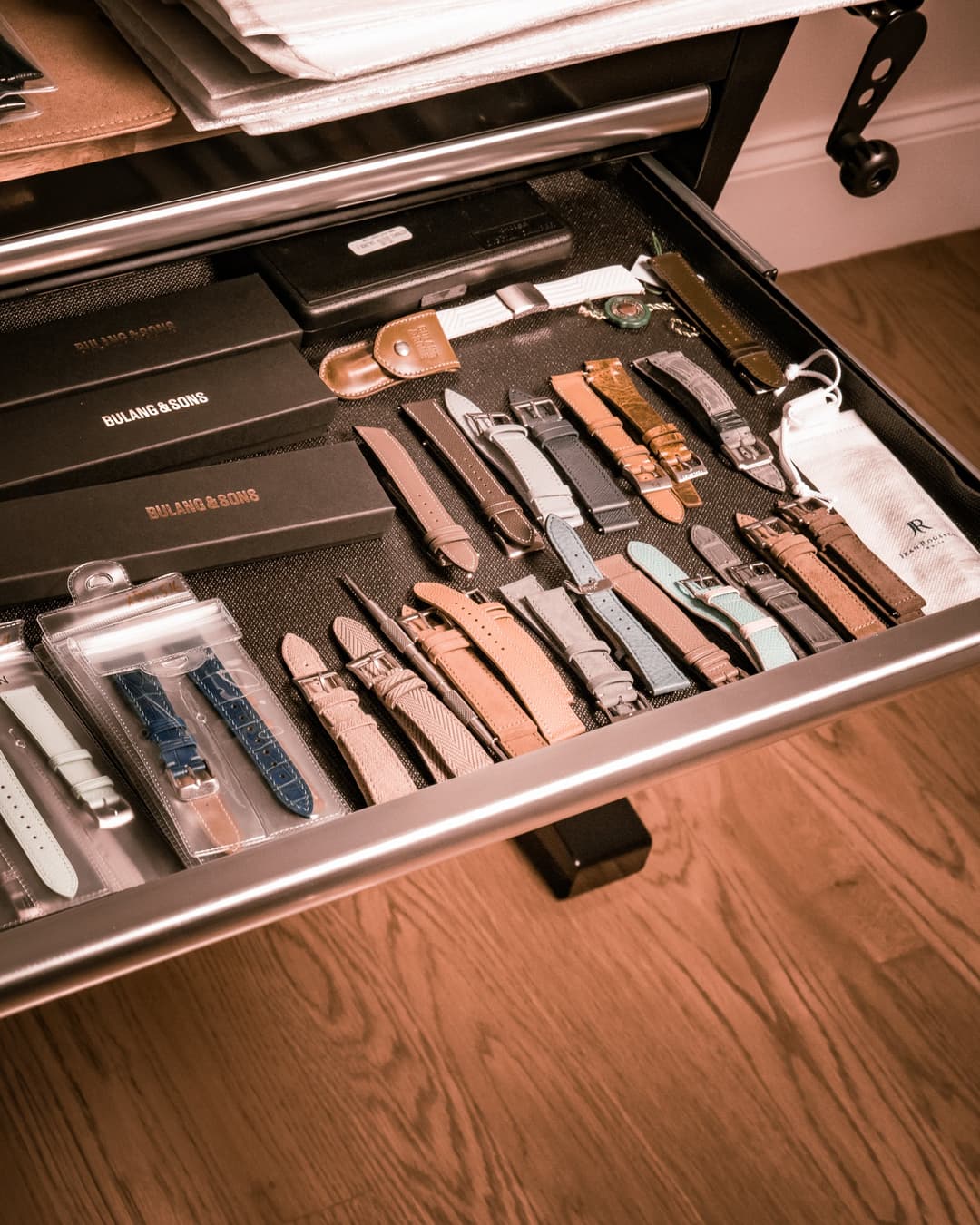
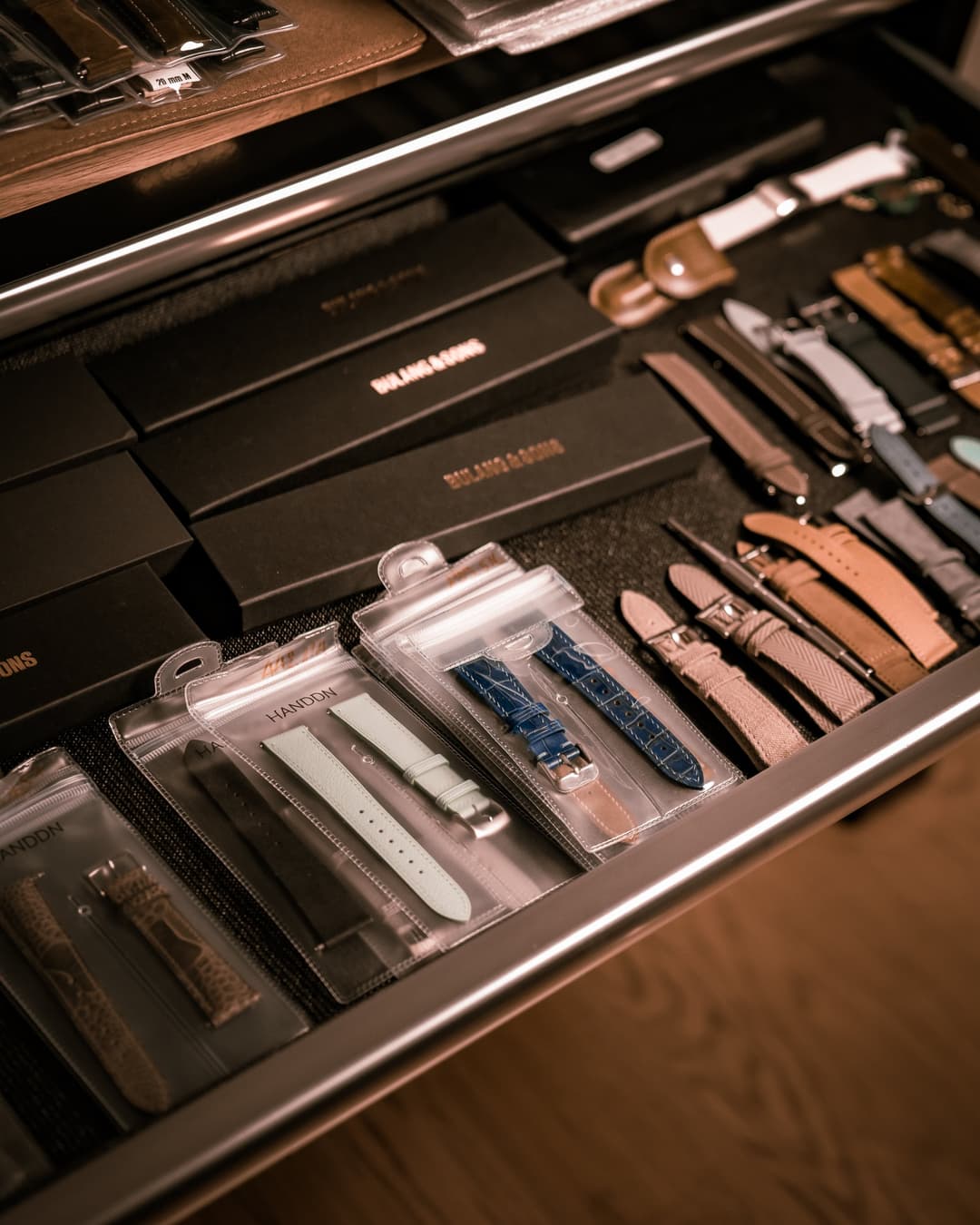
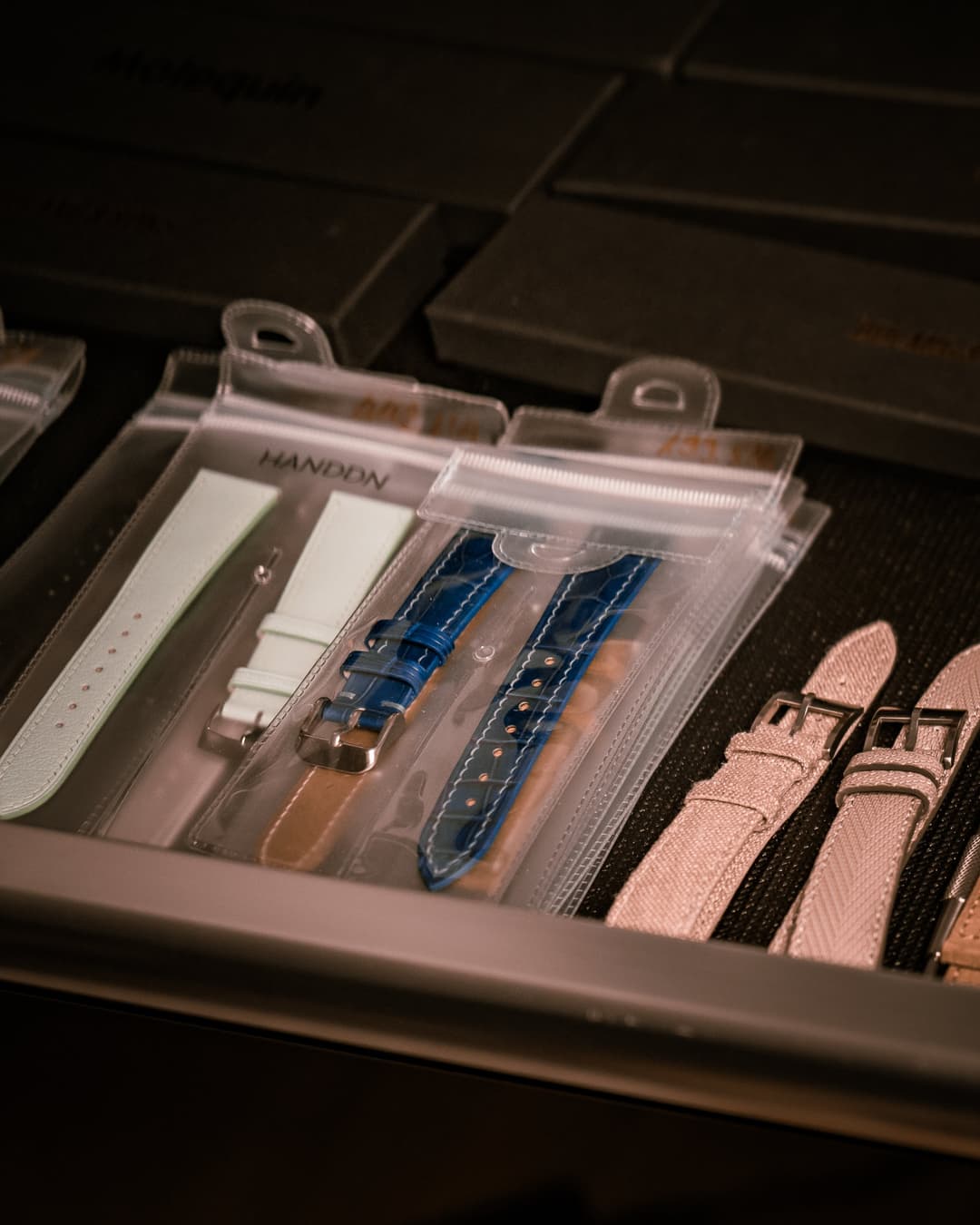
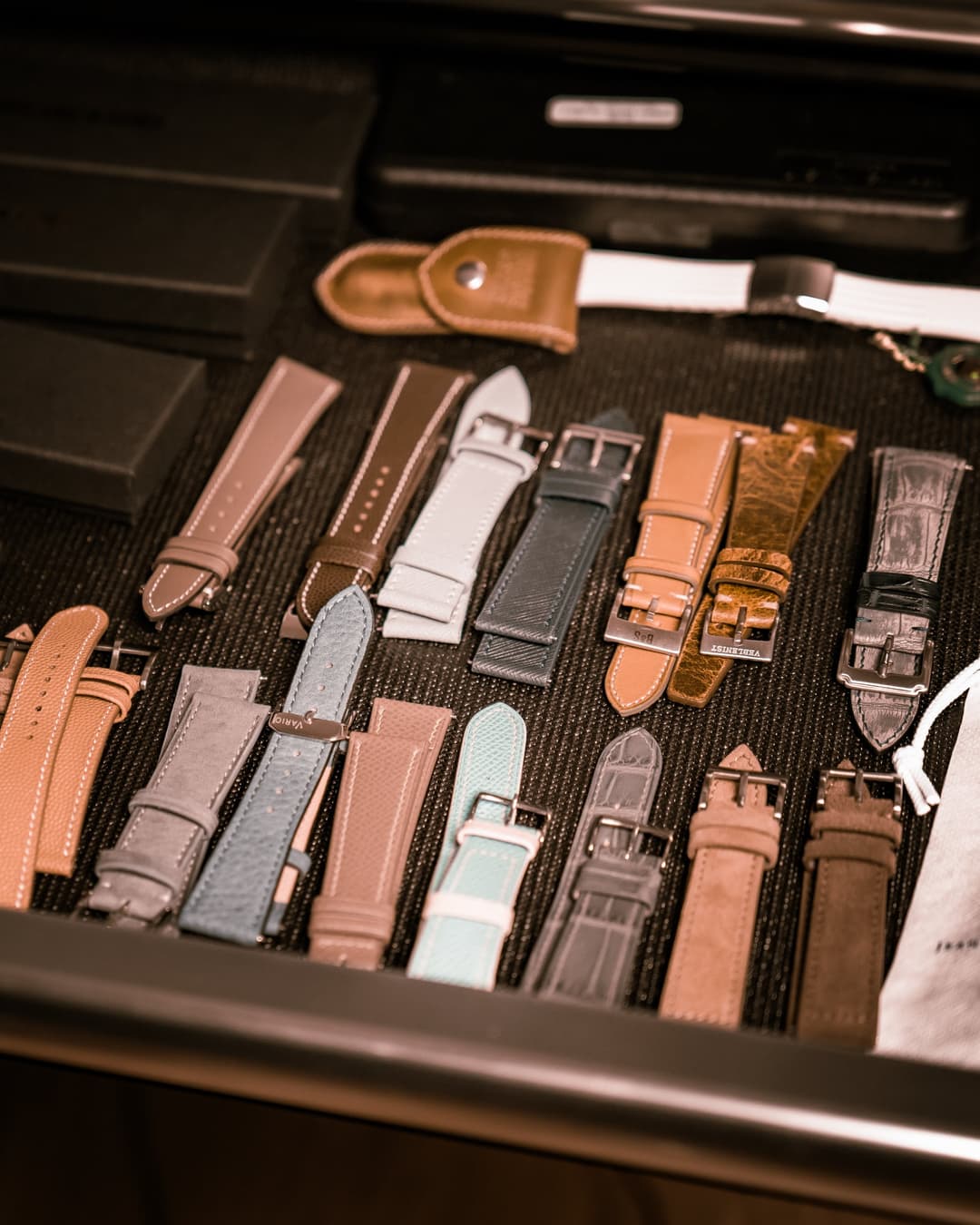
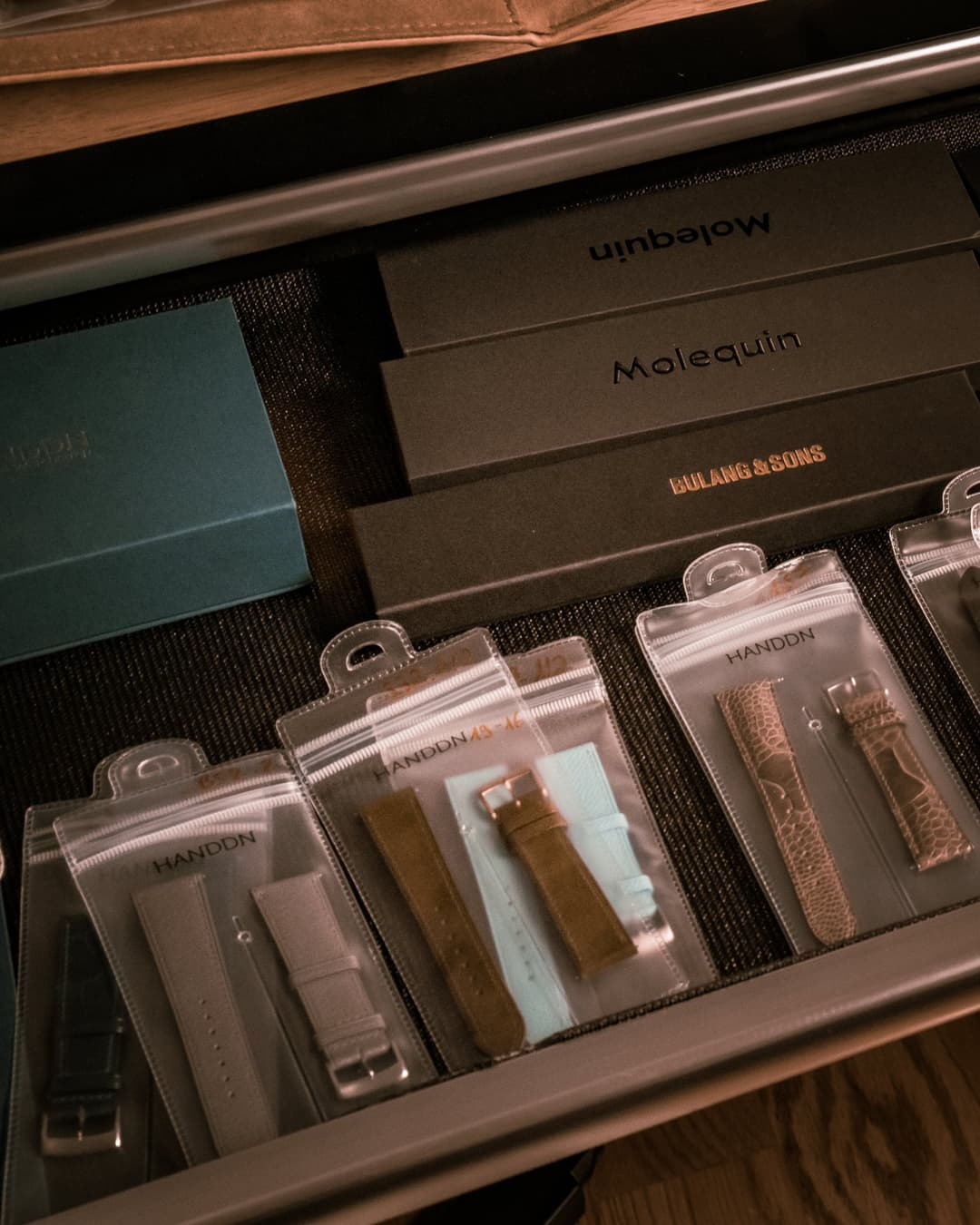
Photography by @midlifecrisiswatches · © 2026 · All rights reserved
The Thing Nobody Tells You: They're All Buying From the Same Few Places
Before we talk about who to buy from, you need to understand something that reframes the entire category. Almost none of these ateliers raise the animals or run the tanneries. Jean Rousseau doesn't own a crocodile farm. Neither does Atelier KAI, Delugs, or the small one-person shop you found on Instagram last week. A tiny handful of tanneries supply nearly the entire independent strap industry, and several of them are now owned by the same luxury conglomerates that own the watch brands themselves.
A short list of who actually controls the raw material:
Tanneries Haas (France, owned by Chanel): the source for Zermatt lining calfskin, which has become close to an industry standard for high-end strap interiors, plus Epsom and Novonappa Barenia.
Heng Long (Singapore, an LVMH subsidiary) and Hermès Cuirs Précieux: the two dominant sources for premium alligator and crocodile.
Tannerie Degermann and Alran Sas (both France): specialty double-tanned calfskins and vegetable-tanned goat.
Shinki Hikaku (Japan) and Horween (Chicago): the two names behind essentially all shell cordovan.
A cluster of Tuscan houses, including Conceria Walpier and Badalassi Carlo, supplying the vegetable-tanned bovine leathers you see in rugged, patina-heavy straps.
Because a handful of tanneries enforce enormous minimum order quantities, the small ateliers you love buy through middlemen distributors instead of straight from the source. That adds real cost, often thirty to sixty percent over what a big brand pays wholesale. Which means when you're comparing two straps in similar exotic leathers, you are very often looking at the same raw hide from the same tannery, cut and finished by two different hands.
I want to be clear about what this means and doesn't mean. It doesn't mean the $60 strap and the $400 strap are secretly the same product. It means the price difference isn't primarily about the leather. It's about labor, precision, and what happens to that hide after it leaves the tannery. That's the part worth understanding, because it's the part you can actually evaluate with your own eyes.
What You're Really Paying For
Four things separate a mass-produced strap from a bespoke one. None of them are the raw material.
Scale selection, on exotics. A crocodile or alligator hide has a wide belly with symmetrical square scales, and narrower flanks with small, irregular round scales. The good ateliers cut almost exclusively from the belly, sometimes called the "noble cut." A single 35cm hide might only yield two to four pairs of premium straps once you throw out everything but the center. Cheaper straps are cut from the flanks or off-center, which is why they look muddled or run diagonally across your wrist instead of tapering cleanly.
Stitching method. This is the one I'd tell any new collector to learn first, because you can check it yourself with a loupe. Machine lock-stitching uses two threads, one on top and one underneath, that interlock inside the hole. Snap one thread and the whole line can unravel. Hand saddle stitching uses a single waxed thread with a needle on each end, passed through the same hole from opposite directions and knotted in the center. Cut a saddle stitch and it stays locked in place. Under magnification, saddle stitching shows a slight diagonal lean. Machine stitching is dead straight.
Edge construction. There are two honest approaches here. A cut edge (coupé sellier) laminates the top leather, core, and lining together, then finishes the exposed edge by hand: beveling, multiple coats of edge paint, heat creasing, sanding between coats, then a beeswax burnish. Done right, this is four or five separate passes. A turned edge (rembordé) skives the top leather down to a fraction of a millimeter and folds it entirely over the core, so there's no painted edge at all. It looks cleaner but demands more elastic leather and more skill to execute without cracking.
Internal core. This is invisible and it's the part that determines whether your strap holds its shape for five years or goes soft and misshapen in one summer. Cheap straps use cardboard or bonded scrap. Good ones use skived calfskin cores tapered from the lug end down to the buckle, often reinforced with a non-stretch membrane around the spring bar holes and buckle punches so those spots don't stretch out over time.
A Rough Tier Map
I'm not going to tell you which specific strap to buy, because taste is personal and that's the entire point of this hobby. But here's roughly how the market breaks down, so you know what you're actually paying for at each level.
The Ateliers Worth Knowing
I've bought from most of these, and I want to be straight with you: this is not a ranking. These shops occupy different lanes on purpose, and the right one depends on what you're after, not which is objectively "best."
Jean Rousseau operates out of Besançon, the historic center of French watchmaking, and runs as a full integrated manufacture with boutiques in Paris, New York, London, and Tokyo. They supply OEM straps to Swiss brands directly, and for complex cases they use 3D laser scanning to build gapless end-inserts, which is the kind of engineering overkill I respect.
Atelier KAI in Singapore is the opposite model: one craftsman, every strap hand-cut and hand-stitched start to finish. That's why lead times run five to six months. They source from Heng Long, HCP, Shinki Hikaku, and specialize in unusual finishes like pearlescent alligator and tilapia skin.
Aaron Bespoke out of Montreal lets you spec nearly everything: material, thread color, stitch pattern, padding gauge. Founder Aaron Pimentel has built a real following for custom patina work and for solving fitment on oddball lug shapes like Panerai and Royal Oak.
Handdn in Da Nang runs a team-based workshop with genuinely fast turnaround, three to five business days, without cutting corners on hand stitching. Good entry point if you want a real hand-made strap without a multi-month wait.
Molequin out of France sources exclusively from French farms and tanneries and leans minimalist: thin profiles, precise tapers, tonal stitching. If your taste runs vintage and understated, this is the lane.
Bulang & Sons helped popularize the vintage strap look in the first place. Dutch-rooted, manufactured through Italian workshops, built around Tuscan leathers, distressed suedes, and repurposed military textiles. Great fit for vintage sport and chronograph pieces.
Delugs in Singapore has scaled further than most while keeping quality consistent, with engineered fitments and pre-installed quick-release bars that make premium leather straps more practical for daily wear.
TsLeatherGoods, based in Vietnam, is another single-artisan operation in the same spirit as Atelier KAI. Everything is handmade, working in exotics like alligator, ostrich, and stingray alongside Epsom and cowhide, with full bespoke customization available for lug width, lining, and finish.
TheStrapTailor, founded by David Richards in the UK, follows the same solo-artisan model. Every strap is hand cut and hand saddle stitched, sourcing calfskin, croc, cordovan, and ostrich, and the shop has quietly become the go-to leather partner for a handful of British microbrands, including Studio Underd0g.
Worth knowing on the periphery: AlexCrown is a retail curator, not a manufacturer. They don't make straps, they sell you access to houses like Jean Rousseau. Useful to know the difference so you understand who's actually making what you're buying.
Beyond Leather: Nylon, Rubber, Sailcloth, and Canvas
Everything above applies to leather and exotics, where the tannery oligopoly and the hand-craft grading criteria actually matter. But a good chunk of my own rotation isn't leather at all, including the nylon strap currently on my Omega NTTD. Different materials, different supply chain, different things to evaluate.
Anchor Strap Co, designed in Southern California, is where that NTTD strap came from. Their nylon runs a tighter, satin-style weave than the standard seatbelt NATO you'll find everywhere else, and it holds its shape instead of going slack after a few months of wear. They've also branched into FKM rubber and elastic deployant straps built around the same tactical, built-to-move sensibility.
Artem Straps, started by two friends in Adelaide, Australia, more or less created the modern sailcloth strap category because they couldn't find one good enough for their own watches. Sailcloth sits in an odd, useful spot: it wears in like leather, resists water and sweat like rubber, and the material composition itself is proprietary, which is part of the brand's whole identity.
Horus Straps, out of Florida since 2014, was one of the first serious players in aftermarket rubber and has since expanded into elastic and woven straps as well. Their strength is fit engineering, straps built to integrate cleanly with specific case designs rather than a generic one-size-fits-most rubber band.
RSM Watch Strap is the hardest of this group to put in a single box, because they run leather, canvas, silk, and alligator lines side by side, sourcing Japanese cotton canvas alongside Italian Epsom and exotic skins. If you want to try a material you've never worn before, silk or fine canvas included, this is a reasonable place to start.
For non-leather straps, forget scale geometry and edge paint. What you're actually evaluating is weave or compound density, hardware quality (look for 316L stainless on buckles and keepers), and how the strap performs after repeated wear and washing. A cheap nylon goes limp and frays at the edges within a season. A good one doesn't.
How to Grade a Strap Yourself
Next time you're evaluating a strap in person, or even from photos, check these four things in order:
Look at the scales. Square, symmetrical, running parallel down the strap? Good sign. Small, round, or running diagonally? That's a flank cut.
Pull out a loupe and look at the stitching. Straight and parallel means machine. A slight diagonal lean means hand saddle stitch.
Run your finger along the edge. It should feel smooth and continuous, with no visible seam between the top leather and the lining. That's four or five coats of hand-applied edge paint doing its job.
Flex the strap gently near the buckle and spring bar holes. If it feels floppy or the holes look like they're already stretching, the core is cheap. It should hold its shape without going stiff.
Frequently Asked Questions
What's the actual difference between a handmade and a machine-made watch strap?
A machine lock-stitch uses two threads that interlock inside the hole, which unravels if one thread snaps. Hand saddle stitching uses a single waxed thread with a needle on each end, knotted inside the hole, so the stitch stays locked even if it's cut. Handmade straps are also more likely to be scale-matched, hand-skived, and finished with multiple hand-applied edge coats, versus a single machine pass. Under a loupe, hand stitching shows a slight diagonal lean. Machine stitching is dead straight.
Why are some watch straps softer than others?
Softness comes down to three things: the tanning method, the leather's natural fat content, and break-in time. Vegetable-tanned and oil-infused leathers, like the Tuscan pull-up leathers or shell cordovan, start soft and only get more supple with wear. Chrome-tanned exotics like alligator start stiffer and soften over months. Ostrich is naturally one of the softest leathers out of the box because of the fat content in the hide itself. Thickness matters too. A thinner, well-skived strap will always feel softer on the wrist than a thick one, regardless of material.
What's the main difference in pricing between straps?
It's not the raw hide, it's the labor. Most independent ateliers buy from the same handful of tanneries, so a $60 strap and a $400 strap are very often cut from comparable material. The price gap comes from scale selection and yield, hand versus machine stitching, how many passes go into the edge finish, and what's built into the internal core. Custom sizing and long lead times add cost too.
Is European or Asian leather more expensive?
This isn't really a geography question, it's a tannery and species question. Some of the most expensive lining calfskin in the world comes from France, Tanneries Haas' Zermatt and Novonappa Barenia among them. But some of the most prized exotic leather in the world comes from Asia, Heng Long in Singapore is an LVMH-owned tannery considered one of the two best sources for alligator and crocodile on earth, alongside France's Hermes Cuirs Precieux. Japan's Shinki Hikaku is the benchmark for shell cordovan. The premium is about the specific tannery's reputation and process, not which continent it sits on.
What's the most premium cowhide or crocodile leather?
For calfskin, Novonappa, also called Barenia, out of the French tanneries is generally considered the top of the heap, prized for its self-healing pull-up finish and the rich patina it develops over years of wear. For crocodilian, it comes down to two species: alligator mississippiensis, the American alligator, and Crocodylus porosus, the saltwater crocodile. Both are sourced by the same top-tier tanneries and both command a real premium over caiman or other lower-grade crocodilians, largely because of hide size, scale consistency, and how few usable center-belly panels each hide yields.
What about leathers like ostrich or stingray?
Ostrich is defined by its quill pattern, the raised bumps left by feather follicles, and only about a third of the hide, the crown, actually carries that pattern. It's naturally one of the softest and most durable exotic leathers, and it tends to run less expensive than alligator, generally somewhere in the $80 to $200 range depending on quill density and hide grade. Stingray, also called galuchat or shagreen, is closer to cartilage than traditional leather. It's extremely hard-wearing and often polished to a glossy finish with a pearl cluster left visible at the strap's center. Expect to pay somewhere in the $100 to $250 range depending on whether it's polished and whether the pearl is featured. Treat both of these price ranges as a general guide rather than gospel, since they move around a fair amount by hide size and maker.
How do I find my watch's lug width?
Measure the gap between the two lugs where the strap attaches, in millimeters. Most watches run 18mm, 20mm, or 22mm, though it can range anywhere from 16mm to 24mm on larger sport pieces. If you don't want to measure yourself, search your exact watch reference and lug width, most brands publish it.
What size strap does my wrist need?
Measure your wrist circumference with a soft tape or a piece of string, then match it to the strap length. As a rough guide, a 6 to 7 inch wrist typically wants a short-to-medium length, 7 to 8 inches medium, and anything above 8 inches you'll want to size up or confirm the maker offers a long option. Most ateliers list this in their sizing guide, and several makers will build to your exact wrist on request.
What's the difference between quick-release and standard spring bars?
A quick-release spring bar has a small lever or tab you can press with your fingernail to pop the strap off, no tools needed. A standard spring bar requires a spring bar tool to compress and remove. Quick-release is more convenient for frequent strap changes, though a few purists prefer standard bars on higher-end pieces since they sit slightly more secure and don't have the small lever visible at the lug.
How do I break in a new leather strap?
Just wear it. Flex it gently at the lugs and buckle a few times before the first wear to loosen the fibers, then give it normal daily use. Exotic leathers like alligator start stiffer and soften over several weeks. Don't try to speed this up with oils or conditioners on a new strap, most high-end leathers are already treated during tanning and added product can discolor or over-soften them.
How should I clean and store leather watch straps?
Wipe with a dry or barely damp soft cloth after wear, especially if you've been sweating. Avoid prolonged water exposure and skip harsh cleaners entirely. For storage, keep straps flat or gently curved rather than tightly coiled, away from direct sunlight and heat, which dries out the leather and fades color over time.
How many straps do I actually need in rotation?
There's no right answer, but if you're starting out, three or four covers most bases: one versatile leather for daily wear, one rubber or nylon for sport and swimming, and one dress strap in an exotic or fine leather for formal occasions. From there it's entirely about what you enjoy collecting.
Is a NATO or Zulu strap the same as a two-piece leather strap?
No. A NATO or Zulu strap is a single continuous piece of fabric that passes underneath the case and caseback, so the watch stays on your wrist even if a spring bar fails. A two-piece strap attaches as two separate pieces, one at each lug, which is the standard format for leather and most exotic straps. NATO and Zulu straps trade a bit of thickness under the case for that extra security margin.
Does swapping the strap on a luxury watch affect its resale value or warranty?
Manufacturer warranties almost always cover the movement and case, not the strap, so changing it typically has no effect on your warranty. Resale is a separate question. If you plan to sell down the road, hang on to the original strap and box. Buyers often want the full set, and a watch sold without its factory strap can see a modest discount even if the aftermarket strap you're selling it with is nicer.
Is leather or rubber better for swimming or heavy sweat?
Rubber, FKM, or a good nylon weave. Leather and water don't mix well over time, even water-resistant linings like Zermatt are built to handle incidental moisture and perspiration, not submersion. If you're swimming, rucking, or doing anything sweat-heavy, switch to a rubber or synthetic strap and save the leather for everything else.
Why does my new leather strap smell or feel stiff?
That's normal, especially on vegetable-tanned or heavily oiled leathers. The smell comes from the tanning agents and oils used in processing and fades with airing out and wear. Stiffness works the same way, it loosens as the fibers relax with use. Give it a few weeks before you judge the final feel.
Can any strap fit any watch, or do specific brands need specific end links?
Most watches with standard spring bar lugs will accept any strap of the matching width. The exception is integrated bracelet designs, think Cartier Santos, Royal Oak, or Nautilus, where the strap curves into a proprietary case shape. Several ateliers, including Jean Rousseau and Aaron Bespoke, specifically engineer custom end-inserts for exactly this problem, so it's worth checking if a maker offers a fitted option for your specific reference.