 Midlife Crisis Watches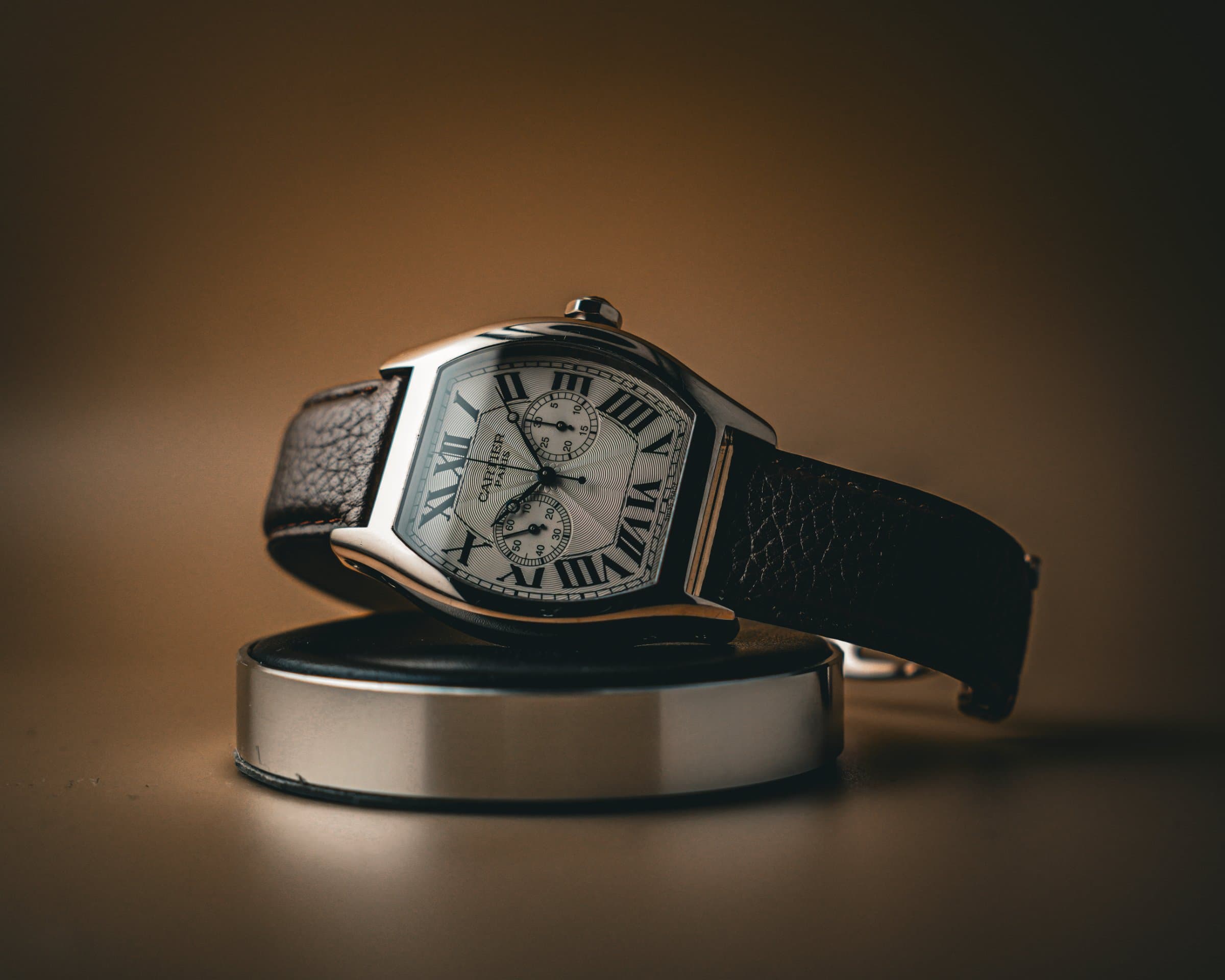
The Long Hunt for a Cartier Tortue Monopoussoir CPCP
Chased for over a year. Lost by twelve hours. Landed anyway.
By @midlifecrisiswatches · · 9 min readSome watches you buy the same day. Others you chase for a year, lose by twelve hours, and then have land in your lap from an online seller you barely know.
This is the story of the second kind.
What I Was After
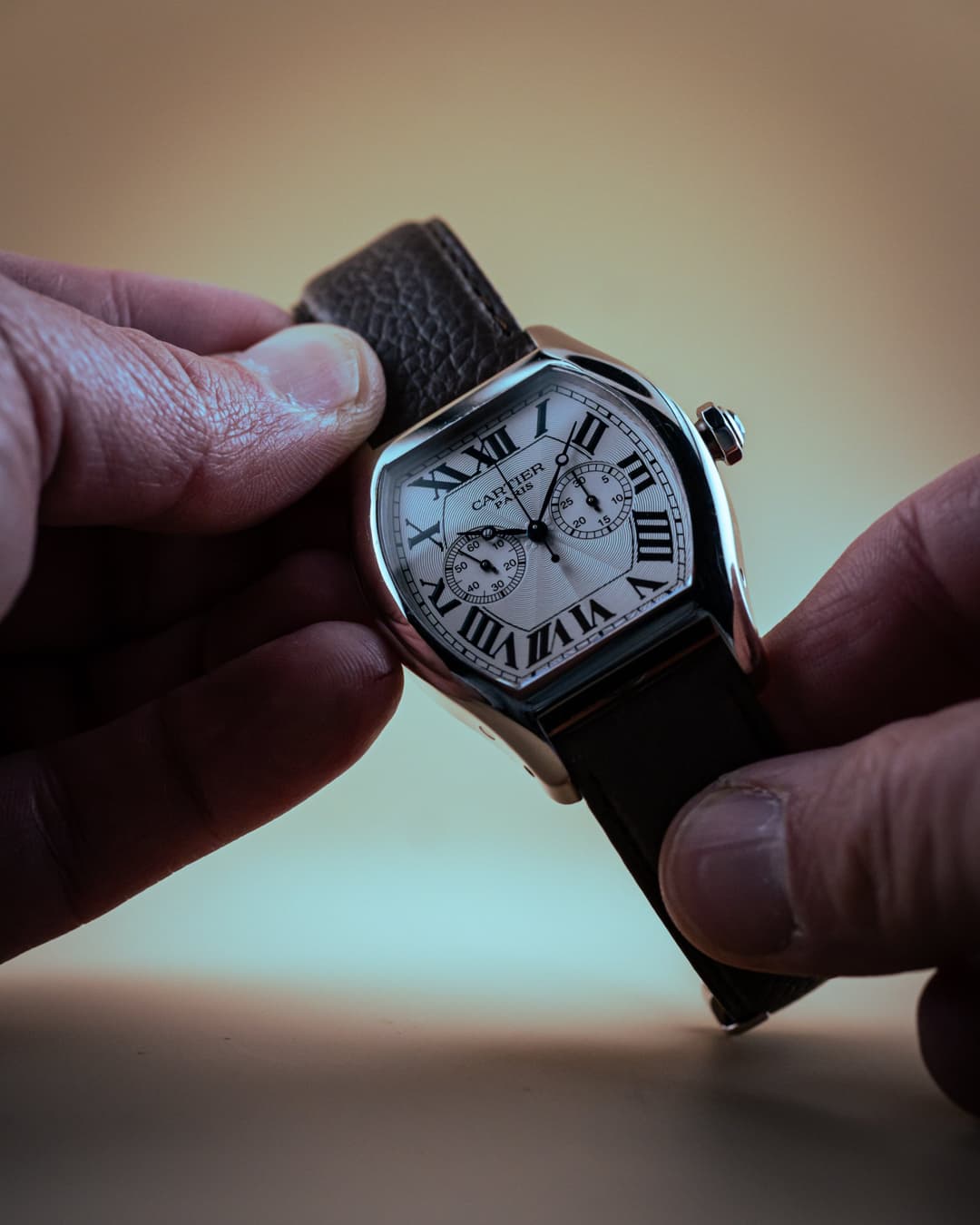
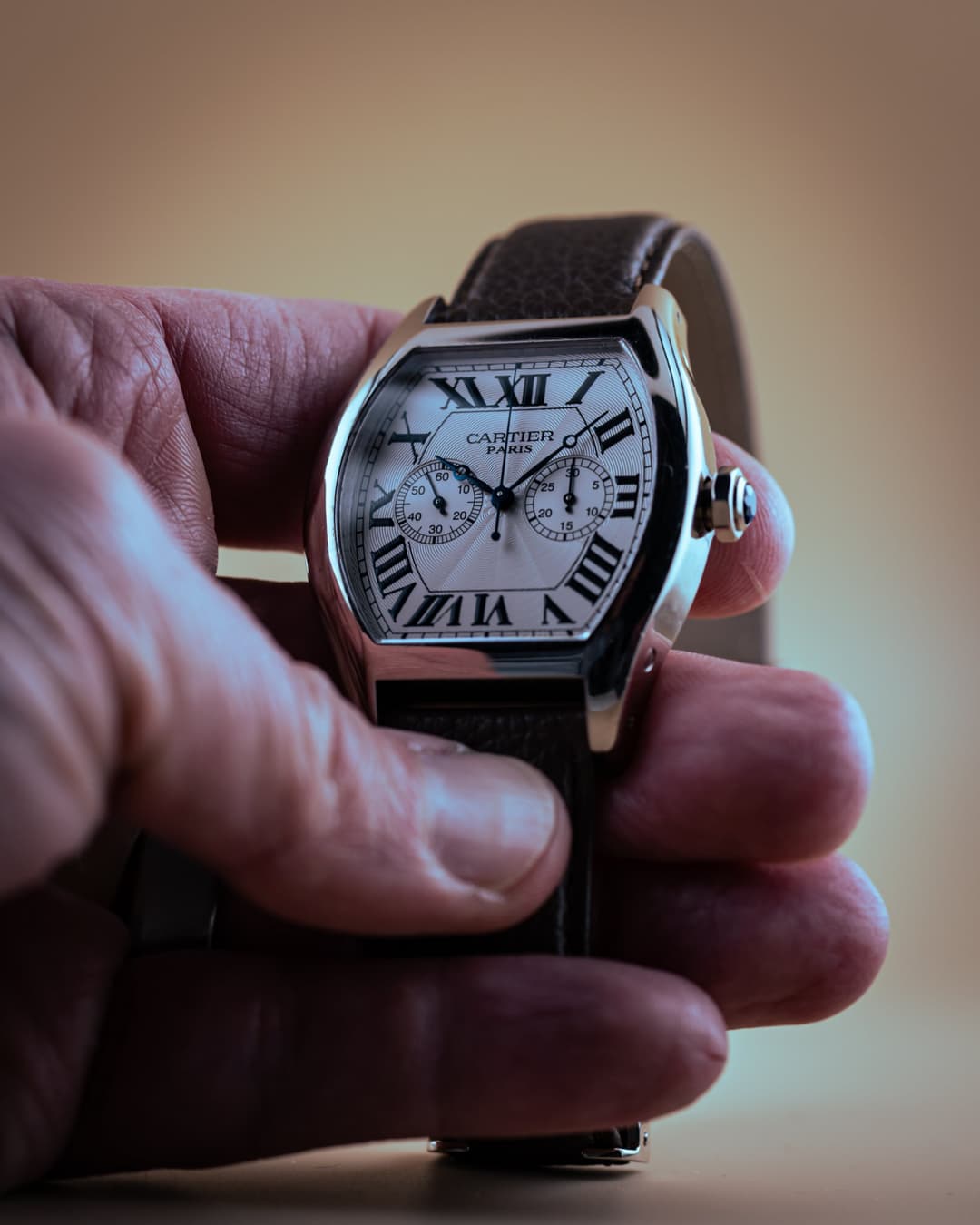
The Cartier Tortue Monopoussoir CPCP was produced from 1998 to 2008 as part of the Collection Privée Cartier Paris, the small mechanical division Cartier built to remind the world it was a watchmaker, not just a jeweler running on quartz. The Tortue Monopoussoir is a single-button chronograph in a tortoise-shaped case, available only in precious metals, with a dial signed "Cartier Paris" under the maison name and a tiny rosette around the central pinion. It is restrained, beautifully proportioned, and on the wrist it does not announce itself. Exactly the kind of watch that I’ve built my collection around.
I wanted the white gold version. The yellow gold is more common and, to my eye, less interesting. I also am not comfortable yet wearing yellow gold, maybe I’m still early in my collecting journey.
The dial matters here. There were several variants over the production run. A small number, including the rare beaded-marker / Big XII dial with beaded hour markers and triangular corner motifs, command an entirely different conversation than the standard CPCP execution. There is also a salmon dial limited to 13 pieces for the rue de la Paix boutique. Same case, very different markets.
I have found that prices today land roughly between $35,000 and $175,000, depending on precious metal, dial, and condition. Box and papers move the number to the upside. So does the seller's reputation and watches provenance.
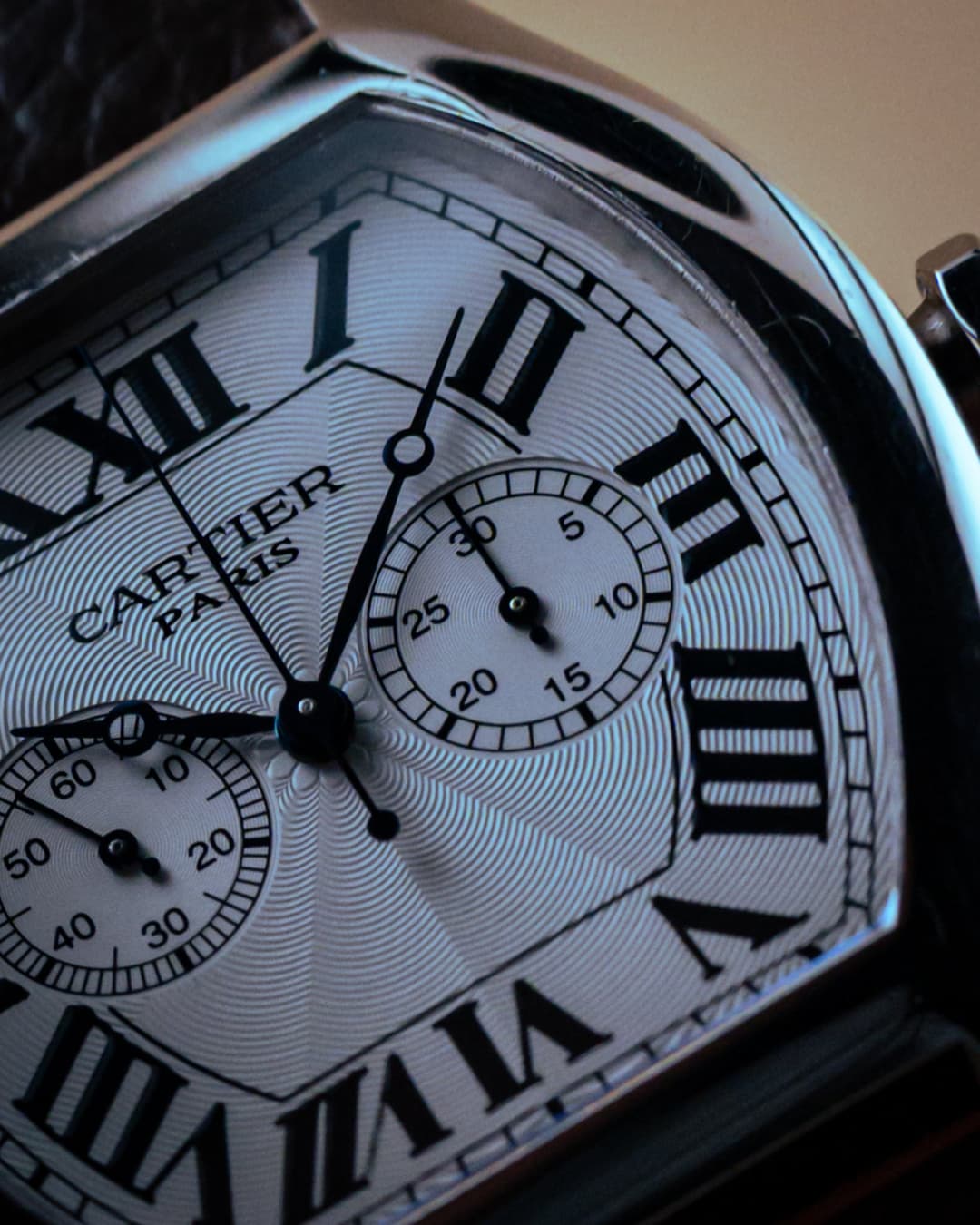
Photography by @midlifecrisiswatches · © 2026 · All rights reserved
Why This Watch Is Different
For me, the case and dial are reason enough to want one. The movement is what makes it strange and special and the reason why I spent 12 months chasing this watch.
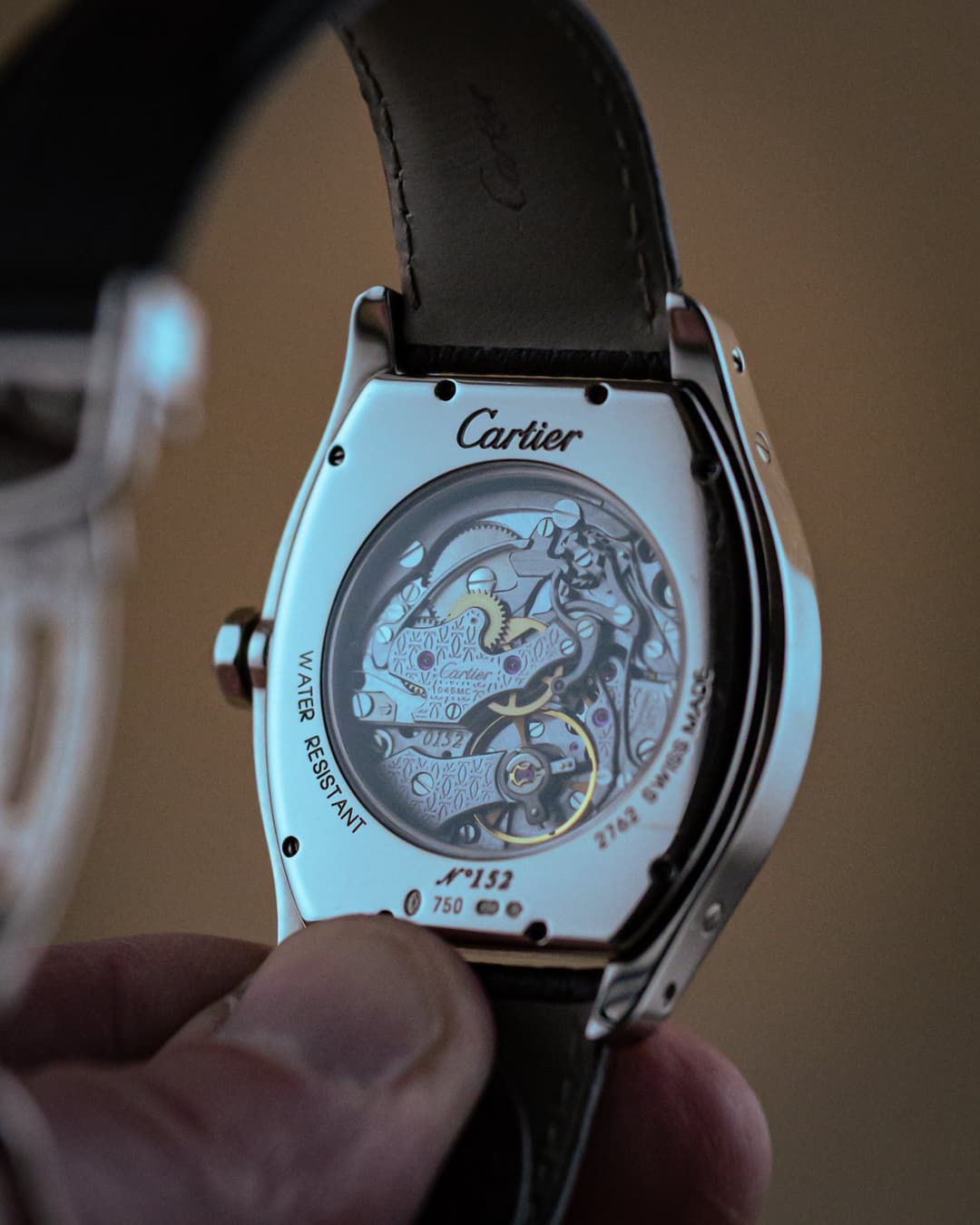
Inside is the Calibre 045MC, a hand-wound monopusher chronograph with a column wheel and an oscillating pinion. It was developed for Cartier by THA (Techniques Horlogères Appliquées), a small Swiss outfit that supplied movements to high-end clients in the late 1990s and early 2000s.
THA was founded by three people: François-Paul Journe, Vianney Halter, and Denis Flageollet. If those names do not mean anything to you, here is the short version. Journe is now F.P. Journe, arguably the most important independent watchmaker of the modern era. Halter has built a cult following with his own avant-garde brand. Flageollet went on to co-found De Bethune, which sits near the top of any serious independent watchmaking list. He later adapted the same caliber architecture for the De Bethune DB8. If you look up patents, you’ll absolutely see Flageollet on the applications.
So you have Cartier on the dial. Recognizable. Understated. Boutique-friendly. Flip it over and the movement was built by three of the most consequential independent watchmakers of the past three decades, working together as a kind of supergroup before any of them were household names. It’s like the musicians of The Traveling Wilburys.
I find it strange there is not more content written about this caliber. The volume of attention it deserves, given who built it, is wildly out of step with the volume that actually exists. Even at $35K to $175K, the market still feels like it is undervaluing the provenance.
The First Chase
I started researching the Tortue Monopoussoir over a year ago. I watched what little YouTube content exists. I read everything I could find. I did not move on it immediately because I had spent my watch budget in other directions, and a piece in this price tier requires a deliberate decision, not an impulsive one.
I checked Chrono24 routinely. Most of what I found had problems. Missing box and papers. Condition issues. Sellers I could not get a clean read on. Nothing clicked.
A few months ago, a rare sector dial showed up with a well-known overseas seller. This was the variant I had quietly been hoping to find. I contacted the seller in his evening, my late afternoon, and we agreed to talk in the morning. I told my wife. I rearranged the budget. I set an alarm to ring him the minute I woke up.
The watch sold overnight.
In retrospect, I should have offered a deposit on the spot. We had no relationship. He had no reason to hold a near six-figure piece for a stranger based on a polite "let's talk tomorrow." My Instagram following is not the kind of credential that locks down a watch like this. Lesson received.
I had two close friends in a watch text thread who heard the whole story in real time and kept me from spiraling about it. They told me to keep going. I did, but without much conviction. Pieces like this do not come up often, and missing one feels final.
The Acquisition
A few weeks ago, a message landed from another seller I had been quietly in touch with for over a year. Colin at Meticulist (meticulist.net). Colin keeps a small, tightly curated inventory, usually eight to ten watches at a time, and he is well regarded in the corners of the market that I trust. We had built up a low-key DM relationship over the course of a year, with no transaction between us. He simply knew what I was looking for.
His message was direct. A buyer had backed out of a Cartier Tortue Monopoussoir that matched my specs. Was I in?
I dropped what I was doing. I may have ended a work call early. I told him yes immediately and asked for everything he had: pictures, video, condition notes, history. He had the watch incoming and forwarded the original seller's images. Within a few days, the deal was done.
This watch is not the rare sector dial I had been chasing. It is the more standard CPCP dial in white gold, which I had once half-dismissed in favor of the rarer variant. Holding it now, I think the chase had distorted my judgment. The watch is exquisite. The white gold has the weight and presence I wanted. The CPCP details, the rosette, the "Cartier Paris," the Roman numerals, the chronograph layout, all of it sits exactly where it should. It is understated in the way I want my watches to be understated.
Colin earned a strong recommendation. If you are serious in this market, he is worth knowing.
And Then Watches & Wonders 2026 Happened
The watch arrived. Shortly after, Cartier announced the headline of its Privé 10th Opus at Watches & Wonders 2026: a platinum Tortue Chronographe Monopoussoir with a CPCP-inspired dial in burgundy and silver, part of a platinum trilogy alongside the Tank Normale and the Crash Squelette. The exact dial language I had been hunting, brought back officially by Cartier.
It looks superb. I am not going to pretend otherwise.
But the part to flag is what is missing. The new Tortue Monopoussoir runs the Manufacture 1928 MC, the in-house monopusher chronograph caliber Cartier developed for the 2024 reintroduction. Reportedly the thinnest chronograph movement Cartier makes. Technically impressive. It is not the THA 045MC. It cannot be. THA does not exist anymore, and the three watchmakers who built that movement are now three separate independent brands at very different points in their commercial lives.
For collectors, that is the whole conversation. The reissue brings back the dial. It cannot bring back the caliber that gave the original its mythology. What you are buying in 2026 is a beautiful Cartier shaped chronograph with a competent in-house movement. What I have on my wrist is a beautiful Cartier shaped chronograph with a movement built by Journe, Halter, and Flageollet during the period that defined them.
The reissue also has a strange downstream effect on the original market. The rare CPCP dial is no longer the rarest thing you can show up wearing, because Cartier has now produced its own new version. My dial, the one I once thought of as the more pedestrian option, is the one Cartier did not bring back. I will take it.
What the Chase Was Actually About
This is the part of the story that matters more than any of the details above.
I spent over a year on this. I did the research. I lost a watch by twelve hours and learned exactly how that mistake feels. Two friends kept me honest while I sulked. I kept turning over rocks and I found the timepiece, but not the specific model I've been looking for. And then a seller I had been quietly in contact with for a year reached out unprompted, because he remembered what I was looking for.
Good things tend to happen to good processes. Patience is part of the process. So is being known to the right people in a small market, which only happens by showing up consistently over time. Neither of those things is glamorous, and neither shortens the timeline. They just make the eventual outcome more likely.
I want the next decade of collecting to look more like this watch and less like the watches I bought before I knew what I was doing. I love watches with a great story that are underappreciated.
The watch is now in my watchbox waiting for its turn on my wrist.
Oh, I have some bespoke straps on the way from Handdn and Molequin. I’m excited to try a variety of colors and leathers/suedes on her.
Further Reading
The History of the Cartier Tortue Monopoussoir — Revolution
Collector's Guide: Collection Privée Cartier Paris — A Collected Man
The Cartier Tortue Monopoussoir, Collection Privée Cartier Paris — The 1916 Company
The Truth About Cartier, Part Two — Fratello
Cartier Tortue Watch History — Robb Report
Tortue: Patek Philippe 5040 and Cartier Monopoussoir — The Enthusiast's Watch
Hands-On: Cartier Privé Tortue Monopoussoir Chronograph — aBlogtoWatch